

News and Policies
Intangible heritage in Tai'an: The art of stone rubbing
Updated: Aug 13, 2026
chinadaily.com.cn
Print
Share - WeChat

In Tai'an, the ancient craft of stone rubbing — a provincial-level intangible cultural heritage since 2016 — is being kept alive through hands-on experiences and public education. This technique, dating back to the Qin and Han dynasties (BC 221-AD 220), transfers the texture of stone carvings onto paper.
Known as "a living carrier of Taishan culture", the rubbing process involves six steps: cleaning the stone, soaking the paper, mounting it, pressing it into the carvings, adjusting the ink, and applying it evenly. Over generations, it has developed four distinct techniques: dotting, pressing, wiping, and kneading.
The art comes alive when visitors try it for themselves. From local communities to university classrooms, rubbing workshops are springing up across Tai'an, attracting children, students, and even international visitors.
Whether on the mountain or in the village, this millennia-old craft continues to bridge the past and present — one tap of the ink pad at a time.
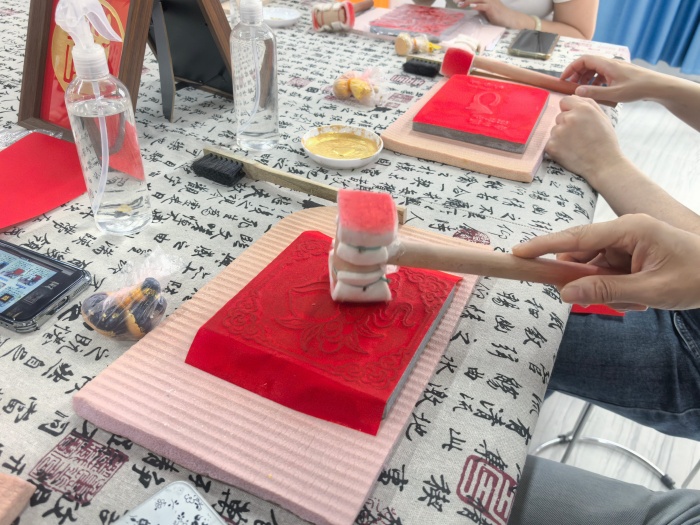
In Tai'an, the ancient craft of stone rubbing — a provincial-level intangible cultural heritage since 2016 — is kept alive through hands-on experiences and public education. [Photo/Xuexi Qiangguo app]
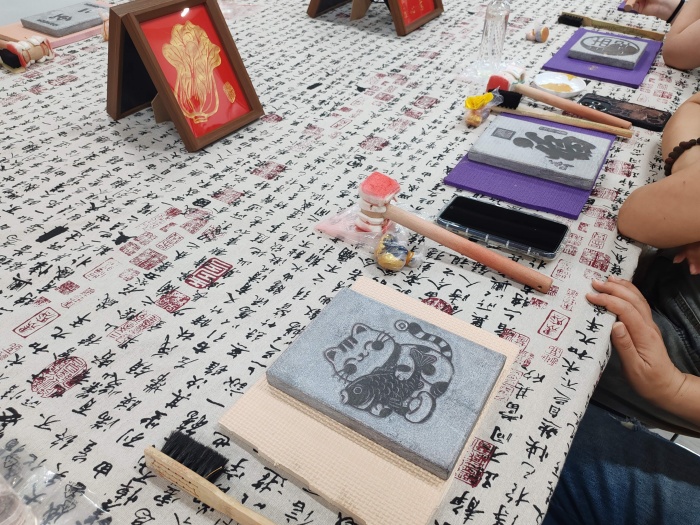
With an inked pad in hand, a participant brings ancient patterns to life, bridging centuries through the art of rubbing. [Photo/Xuexi Qiangguo app]
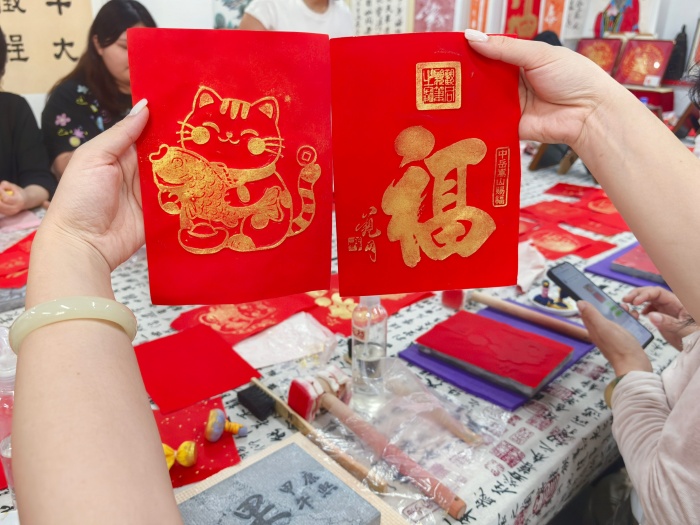
Guided by a master craftsman, children and adults alike discover the joy of preserving China's cultural heritage, one impression at a time. [Photo/Xuexi Qiangguo app]