
News and Policies
Jining's Grand Canal ports power ahead with smart tech
Updated: May 22, 2026
chinadaily.com.cn
Print
Share - WeChat

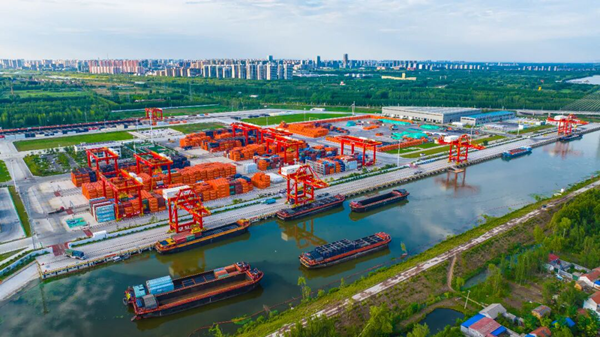
The Longgong Port in Jining. [Photo/WeChat account: gh_ccfd1293bad8]
Jining's Longgong Port on the Beijing-Hangzhou Grand Canal has handled over 200,000 TEUs of containers so far in 2026, a year-on-year increase of 90.48 percent. This represents a major jump for northern China's inland waterway shipping.
The port has become a model for smart inland terminals. It is the country's first inland port to achieve fully automated container operations, using AI and machine vision for precise handling. Sixteen driverless trucks navigate the yard, all managed remotely by a single operator.
These initiatives have enabled Longgong Port to cut its workforce by 75 percent, increase productivity by 50 percent, and reduce energy costs by over 30 percent. These developments provide a blueprint for modernizing inland ports across China.
With growing cargo volumes and expanding logistics networks, Jining is quickly becoming a key northern inland shipping hub along the Grand Canal.