

Latest
Rare wild species on the rebound in China
Updated: May 22, 2026
By Hou Liqiang
chinadaily.com.cn
Print
Share - WeChat

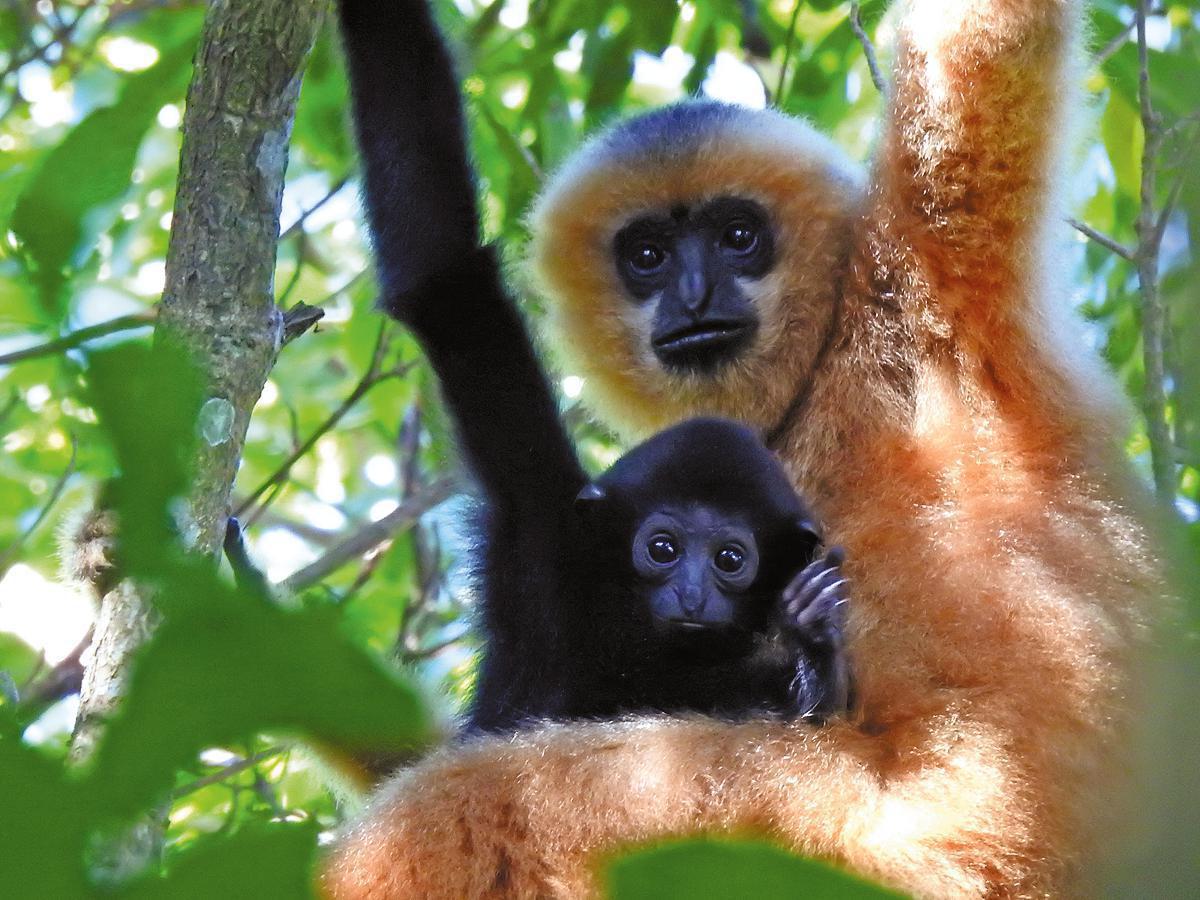
China has seen a steady rebound of rare wild species, as more than 200 endangered wildlife populations enter a restorative growth phase and over 100 threatened plant species receive emergency protection, according to the National Forestry and Grassland Administration.
In a media release on Friday, coinciding with the 25th International Day for Biological Diversity, the administration listed a series of rare and endangered species that show "a positive trend of recovery and growth".
In 2025, three newborn Hainan gibbons were recorded, bringing the total population of the species to 44 individuals across seven groups, it said.
"It has become the only gibbon population in the world to mark continuous growth," the release underscored.
In the Northeast China Tiger and Leopard National Park, a camera trap captured the first-ever footage of a wild Amur tigress nurturing five cubs last year, setting a new national record for the species' reproduction, it stated.
Two reintroduced snow leopards in the Helan Mountains have been observed successfully mating, giving birth, and raising their cubs in the wild, the administration said.
Abies beshanzuensis, a species of fir, has increased from just three plants when it was discovered in 1963 to more than 4,000 plants, it said.
Compared to only 10 plants when it was discovered in 2003 in Pu'er, Yunnan province, the number of Paphiopedilum spicerianum, a species of flowering plant in the family Orchidaceae, has climbed to over 200 plants.
The administration particularly highlighted the country's efforts and progress in bird conservation.
China has brought 94.5 percent of bird species under the protection of the national key list and the list of "Terrestrial Wildlife with Important Ecological, Scientific and Social Value", it said.
The administration said a total of 1,140 important habitats along migratory bird flyways have been identified, and 821 key habitats have been selected for comprehensive protection and restoration.
The country has conducted dedicated anti-poaching campaigns targeting illegal bird hunting for six consecutive years, taking strict enforcement action against activities that harm bird resources, the release added.
Thanks to the efforts, the overall population of bird species under national protection remains stable or is on the rise.
The population of the Baer's pochard, for example, has reached 2,555 individuals, compared to about 1,000 in 2012, it said. The blue-crowned Laughingthrush has increased from about 200 individuals in 2006 to around 660.