

News and Policies
Kuanxiangzi becomes culture, tourism landmark in Hohhot
Updated: Jan 28, 2026
chinadaily.com.cn
Print
Share - WeChat

The winter holiday season marks a peak period for Hohhot as it welcomes tourists from across the country. Nowadays, Hohhot's Kuanxiangzi Food Street has become a must-visit destination for these visitors.
At the entrance of Kuanxiangzi Food Street, an eye-catching cultural installation stands out. The design blends elements of Inner Mongolia autonomous region with vibrant food illustrations – galloping prairie horses, rustic yurts, and mouth-watering shaomai (a kind of steamed dumplings) alongside golden, crispy beizi (a kind of local baked pancakes) to make for a striking visual.
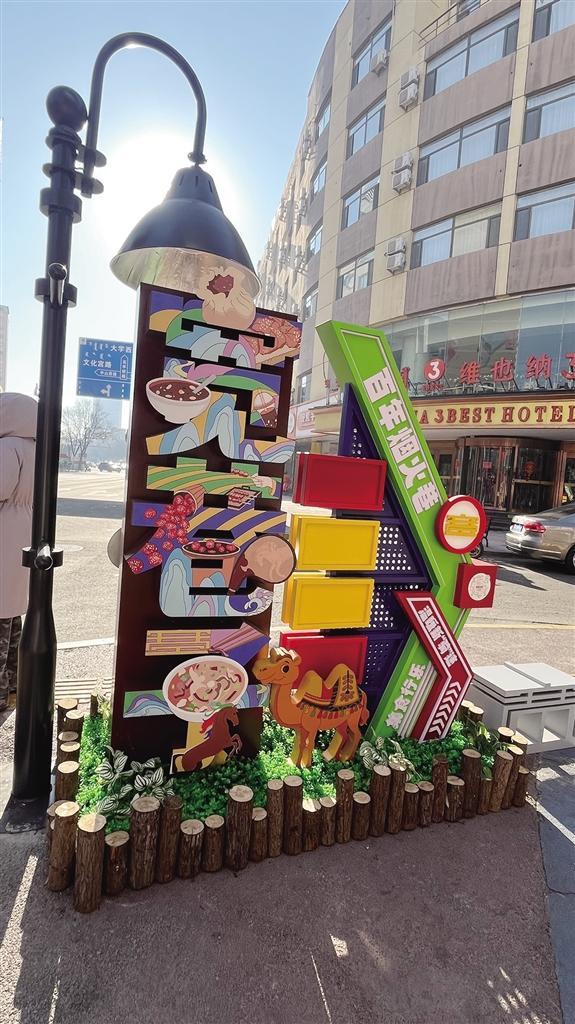
The cultural installation. [Photo/Hohhot Convergence Media]
A core highlight of the cultural installation is its QR code. With a simple scan from a mobile phone, visitors can access a video channel that details the stories behind Kuanxiangzi's specialty foods and various intangible cultural heritage skills. It also offers merchant recommendations, must-eat lists, and check-in guides.
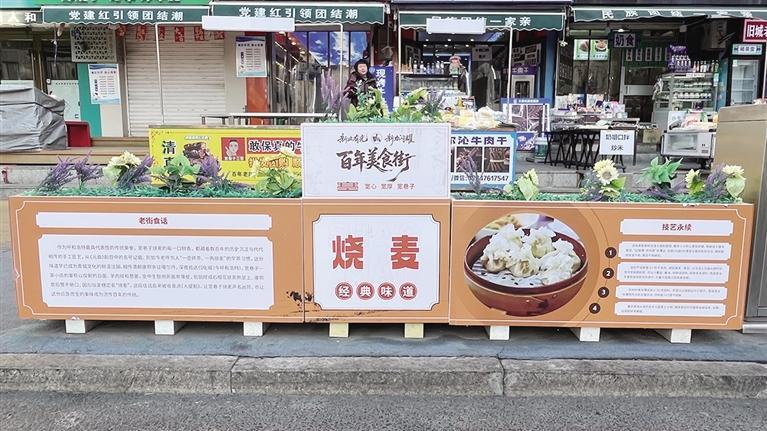
The shaomai "gastronomic-culture flower boxes". [Photo/Hohhot Convergence Media]
The newly added "gastronomic-culture flower boxes" on the street were compiled by Kuanxiangzi community staff members. They visited long-standing merchants in the area, listened to their tales of craftsmanship and industry, and consulted a wealth of materials, repeatedly verifying details before finalizing the content.
A giant beizi sculpture, another popular check-in spot, creatively incorporates shaomai, lamb skewers, and even a globe model, symbolizing how this humble beizi represents both local flavors and diverse, multicultural creativity.
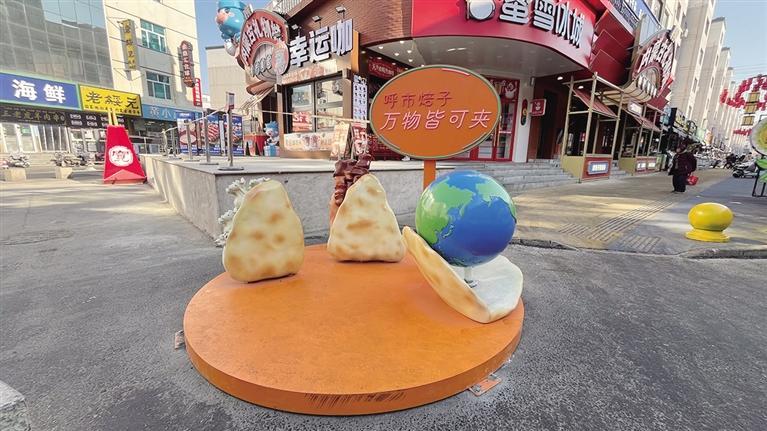
The beizi sculpture. [Photo/Hohhot Convergence Media]


