

News
Cultural treasures back home from UK
Updated: Nov 19, 2020
By Wang Kaihao
China Daily
Print
Share - WeChat


Many of the recovered relics were Song Dynasty (960-1279) porcelains from different kilns, reflecting a booming economy at the time and showing how the production techniques used at the time had spread.
Two intact ceramic vases, dating from the late Yuan (1271-1368) and early Ming (1368-1644) dynasties, are thought to be from the same tomb. A rare stone statuette of a horse was probably tied to a local chieftain in Guizhou province during the Yuan or Ming Dynasty, based on comparisons with other archaeological discoveries.
A group of Han Dynasty (206 BC to 220 AD) figurines portraying dancers is also a key reference for the study of pottery-making technology of the time.
All the returned relics are on virtual display at ncha.gov.cn/col/col2432/index.html on the website of the National Cultural Heritage Administration.
Features
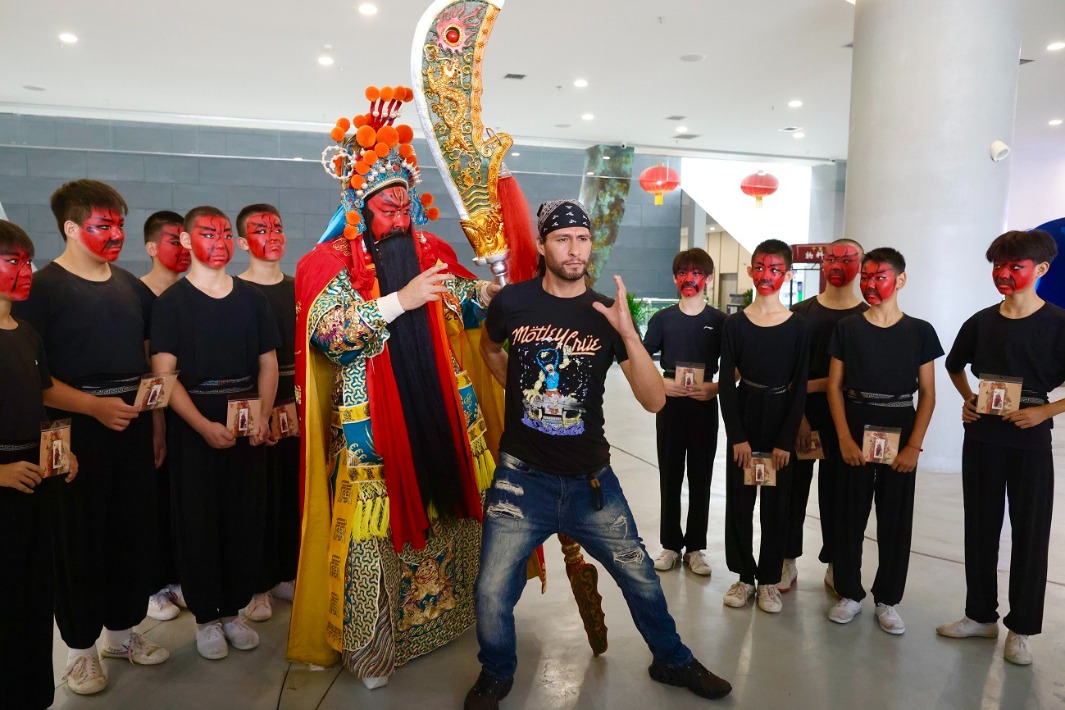 Intangible Cultural Heritage
Foreign vloggers experience Jin Opera in Shanxi
Intangible Cultural Heritage
Foreign vloggers experience Jin Opera in Shanxi
 Intangible Cultural Heritage
Fire Dragon Dance brings fiery night spectacle to Datong, Shanxi
Intangible Cultural Heritage
Fire Dragon Dance brings fiery night spectacle to Datong, Shanxi
