


Yuncheng Museum
Yuncheng Museum is dedicated to collecting, exhibiting, researching, and disseminating the history, culture, and art of Yuncheng city in North China's Shanxi province.

Taiyuan Museum
Taiyuan Museum is a comprehensive museum in China and a national second-level museum, located in North China's Shanxi province.

Jinci Museum
Jinci Museum is located in Jinyuan district, Taiyuan, capital of North China's Shanxi province.


Jinci Tianlong Mountain Scenic Area, Shanxi province
Located in Southwest Taiyuan, the Jinci Tianlong Mountain Scenic Area covers an area of 3.86 square kilometers and has been a renowned tourist destination since the Northern Wei Dynasty (386-534).
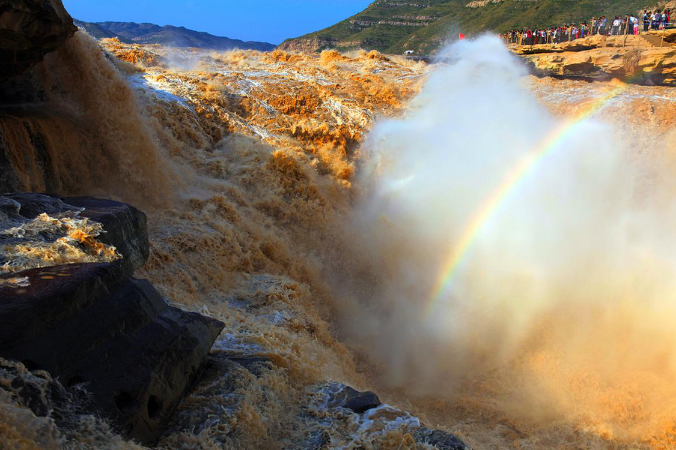
Hukou Waterfall Tourist Area of the Yellow River, Shanxi and Shaanxi provinces
The Hukou Waterfall is a golden waterfall with mobile and subsurface streams. It is formed by the Yellow River running through the Yichuan section of the Qinjin Valley between Shanxi and Shaanxi provinces. The turbulent water stream pours down to the valley and makes for spectacular cascades.

Mount Yun Scenic Area, Shanxi province
The 35 square kilometer Mount Yun Scenic Area stands at the confluence of the Lyuliang Mountain and the Fen-Wei Graben System.
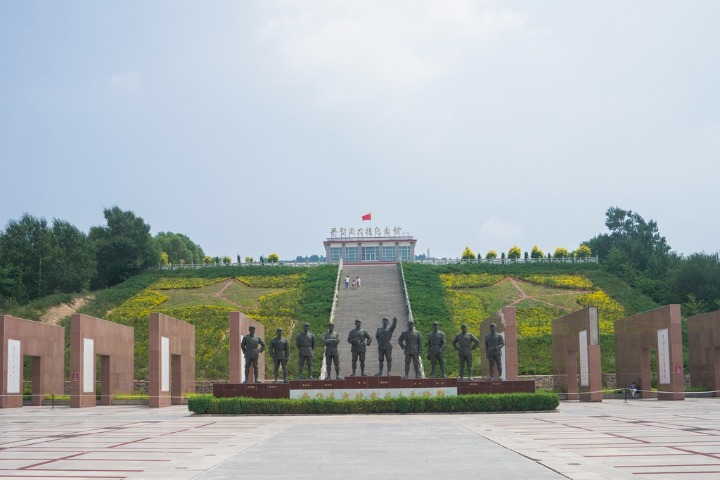
The Site of the Battle at Pingxingguan, Shanxi province
The Site of the Battle at Pingxingguan consists of the site of the Great Victory of Pingxingguan (or the Pingxingguan Ambush), a memorial hall, a monument, and a square honoring military commanders.
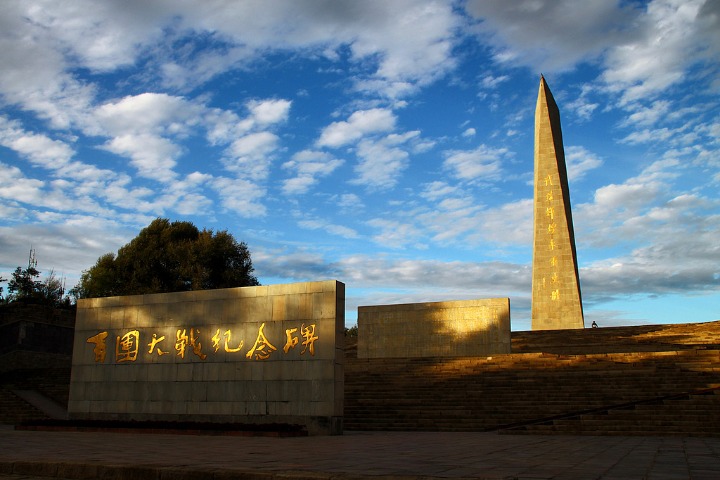
Hundred Regiments Offensive Memorial Hall, Shanxi province
Located atop Shinao Mountain, 10 kilometers southwest of downtown Yangquan in Shanxi province, the Hundred Regiments Offensive Monument rises into the sky like a sharp bayonet.
