


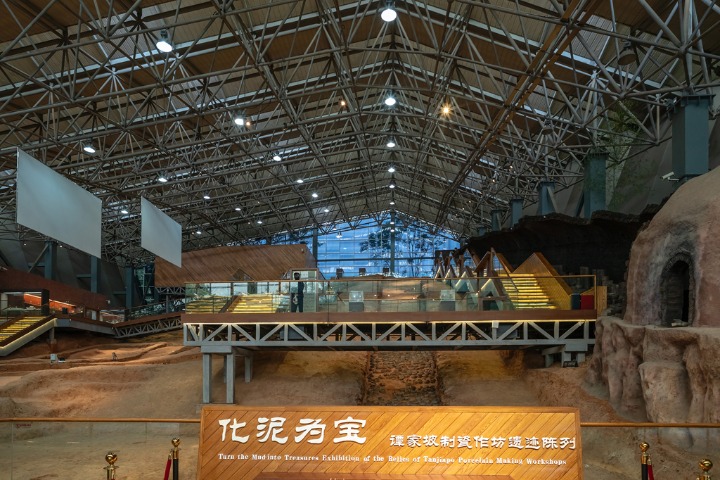
Tongguan Kilns National Archaeological Site Park
In Chinese history, the Tongguan Kilns were active for more than 200 years. They started production over 1,000 years ago during the early Tang Dynasty (618-907), thriving in the mid and late Tang era, before being phased out during the Five Dynasties (907-960).
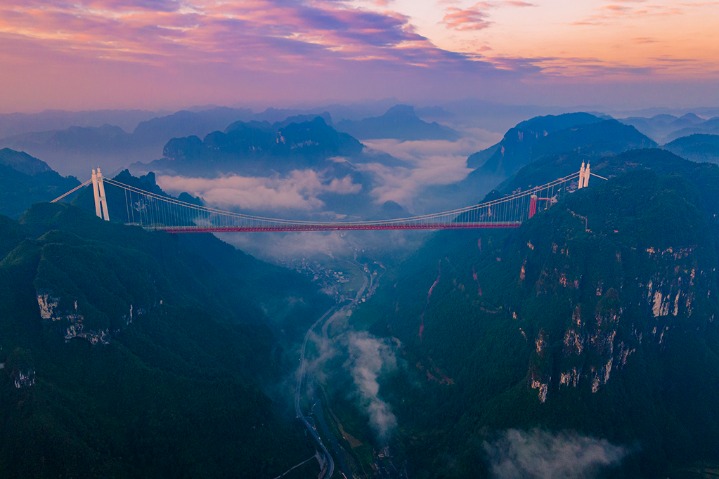
Scenic Area of Aizhai Wonder, Shibadong Village, and Dehang Canyon
Located in the Xiangxi UNESCO Global Geopark, the Scenic Area of Aizhai Wonder, Shibadong Village, and Dehang Canyon is a mainstay of Hunan’s tourism industry and showcases the province’s mysterious natural and cultural landscapes and folk customs.

Hu Yaobang Memorial
Opened to the public in 2015, the Hu Yaobang Memorial is the only national memorial hall to present the life story and personality of Hu Yaobang (1915-89) who was a Chinese revolutionary and politician.

Changsha Museum
Opened to the public in 2015 and covering 240,000 square meters, the Changsha Museum is a comprehensive museum and was selected as one of the national first-class museums at the end of 2020.

Taohuayuan Scenic Area, Hunan province
Located to the southwest of Changde city, Central China’s Hunan province, the Taohuayuan Scenic Area boasts a reputation as a “fishing village bathed in sunset glow” (Yucun xizhao), purportedly one of the Eight Views of Xiaoxiang in ancient Hunan.

Site of the Japanese Surrender in Zhijiang, Hunan province
The Site of the Japanese Surrender in Zhijiang, Hunan province, marking China’s victory in the War of Resistance Against Japanese Aggression (1931-45), is the place where the Chinese people accepted the surrender of the Japanese invaders on August 21, 1945.
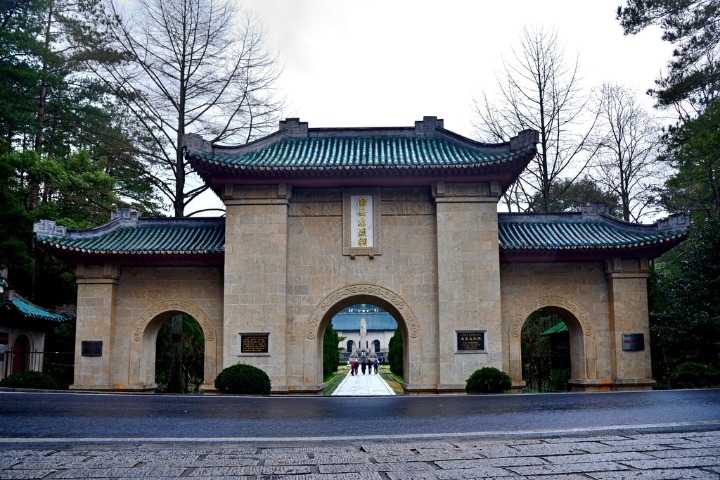
Martyrs' Shrine of Mount Heng (Nanyue), Hunan province
The Martyrs' Shrine of Mount Heng (Nanyue) is located beneath Xianglu Peak of Mount Heng in Nanyue district, Hengyang, Hunan province.

Southern Hengshan Mountain, Hengyang
Southern Hengshan Mountain, is located in Hengyang, a wonderful 2,000-year-old city in Hunan province, Central China.
