

Museum Updates
Echoes from another age
Updated: Nov 3, 2026
China Daily
Print
Share - WeChat

Inside a darkened theater in Central China, rivers wind through forests as scenes of hunting, fishing and farming unfold across a panoramic screen. For a moment, the world outside fades away, and visitors enter a landscape that existed long before written history.
At the museum of Dahecun National Archaeological Site Park in Zhengzhou, Henan province, this experience brings the past to life beyond the pottery shards, stone tools and other objects displayed behind glass. Through immersive exhibitions, reconstructed agricultural landscapes and encounters with animals and plants, the park invites visitors to consider a more fundamental question: What was everyday life like for the people who once lived here?
Dahecun's transformation has taken decades. In the autumn of 1964, villagers working in their fields chanced upon a Tang Dynasty (618-907) tomb. They handed the bronze mirrors and other artifacts they unearthed over to local cultural heritage authorities.
Archaeologists subsequently surveyed the area and discovered numerous artifacts scattered across the site. In October 1972, the Zhengzhou Museum conducted a preliminary excavation at Dahecun, marking the beginning of systematic excavation and research.
After three rounds of excavation, archaeologists mapped the site's extent and layout, traced its development over time and established its cultural significance. A dedicated institution to protect and manage the site was established in 1983.
For much of this period, however, the site had only a relatively small museum. Its archaeological significance was considerable, but conveying that importance to the public remained a challenge.
That began to change in 2017, when the museum and the Zhengzhou Institute of Cultural Relics and Archaeology launched a new round of investigations. Researchers determined that the site covered approximately 530,000 square meters, far more than the previously estimated 300,000 sq m. They also identified features including a ring moat and a city wall, shedding new light on the settlement's size, layout and character.
President Xi Jinping, also general secretary of the Communist Party of China Central Committee, chaired a symposium in Zhengzhou in September 2019. He said the Yellow River culture, as an important part of Chinese civilization, is the root and soul of the Chinese nation, calling for better storytelling about Yellow River culture to pool spiritual strength for the great rejuvenation of the Chinese nation.
"For Dahecun, this was a historic opportunity," says Hu Jizhong, head of the Zhengzhou Institute of Songshan Civilization, who previously worked as a curator at the Dahecun museum. The museum began planning an expansion in 2019, followed by further planning work in 2020. Construction of the national archaeological site park began in 2021.
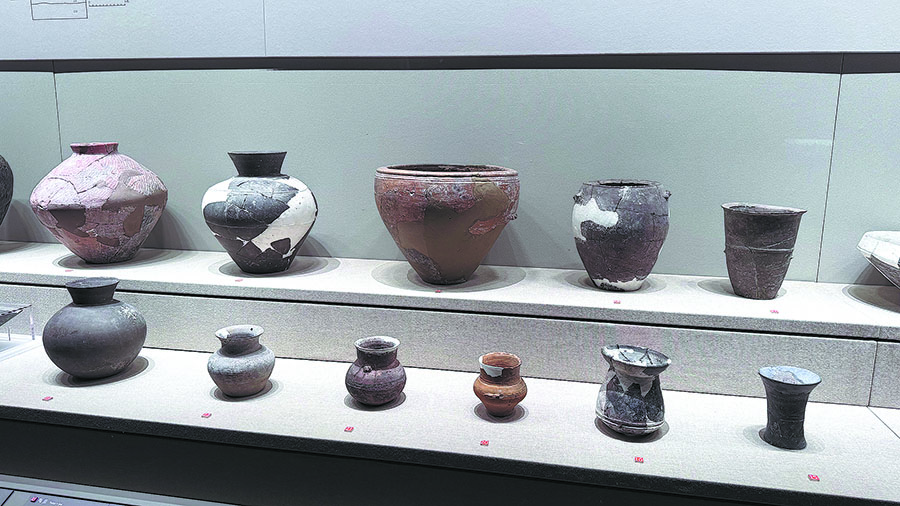
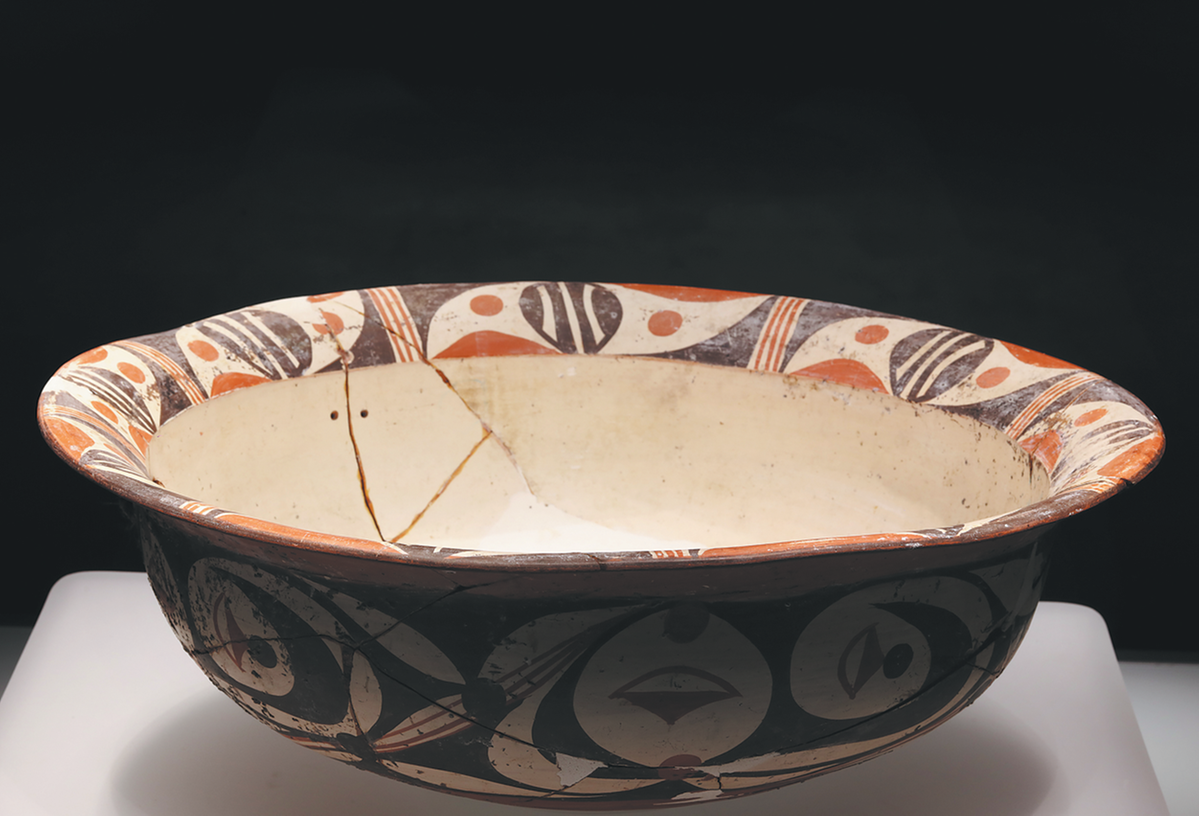
Dahecun is widely regarded as an important Yangshao culture site, a Neolithic painted-pottery culture dating back 5,000 to 7,000 years and first identified in 1921. The settlement preserves evidence of the culture's emergence, development, and later transformation, making it a valuable resource for studying the origins and evolution of early Chinese civilization.
Yet archaeological significance does not automatically translate into public appeal. Pottery fragments, stone tools and other everyday remains can be difficult to interpret without sufficient context.
"Many prehistoric site museums face the same challenge: Visitors may be reluctant to come, may struggle to understand what they see once they arrive, and may leave without gaining much from the experience. Dahecun's redevelopment was designed to change that," Hu says.