

Museum Updates
Echoes from another age
Updated: Nov 3, 2026
China Daily
Print
Share - WeChat

Architecture and antiquity
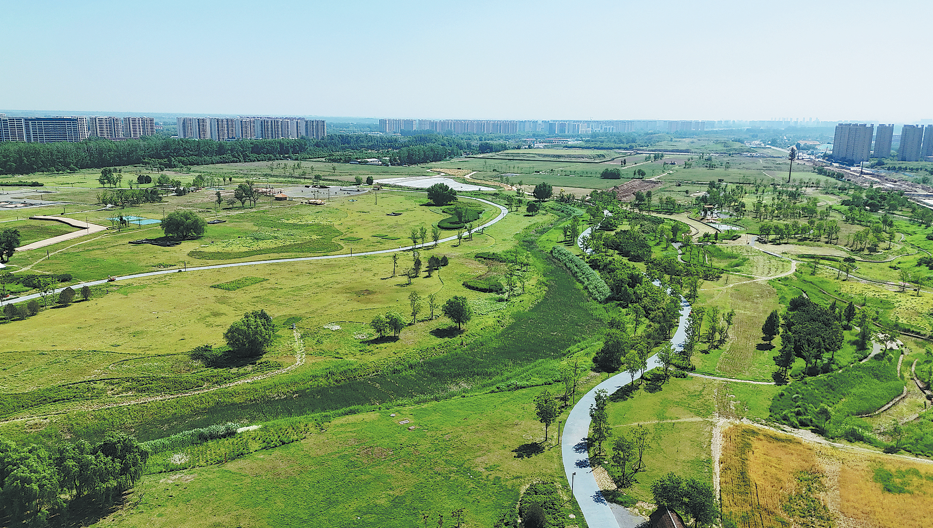
One of the most consequential decisions concerned the museum's architecture. Rather than erecting a prominent building that would dominate the site, designers opted for a sunken structure to minimize its impact on the archaeological remains and surrounding landscape. Its exterior walls and retaining structures echo the soil layers that archaeologists study to reconstruct the site's history.
The same philosophy extends beyond the museum. The park includes restored ecological areas, re-created agricultural plots and spaces for hands-on activities. Drawing on archaeological evidence and research into prehistoric flora and fauna, it has introduced more than 130 plant species to evoke the environment in which the settlement's inhabitants once lived.
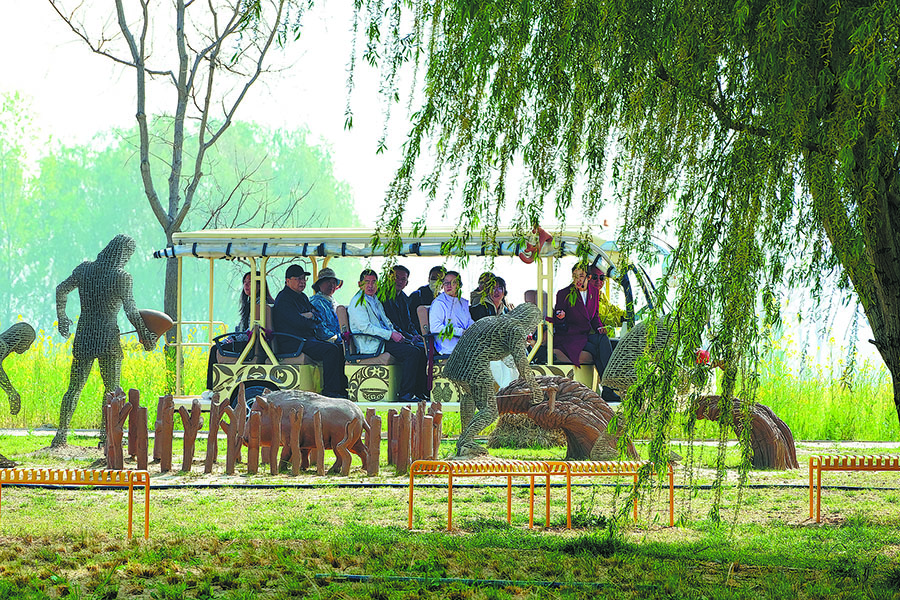
Animals offer another way for visitors to connect with the past. Deer were common during the Yangshao period, and excavations at Dahecun have uncovered deer remains, including antlers, scrapers made from antlers and antler hammers. These finds shed light on the role deer played in the lives of the settlement's inhabitants.
"To help visitors make that connection, we keep more than 50 gentle sika deer in the park. Visitors can spend time with them and feed them, and sometimes even hear their soft bleats," says Wang Xiaoya, a museum guide.
"In the early morning, joggers come for a breath of fresh air. By afternoon, families gather to explore and learn together. As evening falls, young people arrive to unwind and spend time with friends. A settlement that has stood for thousands of years has found a new place in the rhythm of modern city life," says Zhu Xuan, director of the Dahecun National Archaeological Site Park.
Stepping into the past
Technology offers another way to bring the archaeological record to life for contemporary audiences.
At the heart of the museum is Impressions of Yangshao, an immersive exhibition covering roughly 600 sq m. It explores how the settlement's inhabitants made a living, from hunting and fishing to cultivating crops and practicing handicrafts.
The museum describes the experience as bringing a forest indoors. Naked-eye 3D technology allows visitors to see the scenes without special equipment. Another attraction, the "Light of Yangshao" theater, weaves these elements into a narrative-driven production. Stage mechanisms and cinematic techniques re-create the rhythms of prehistoric life, giving visitors a sense of stepping into another era.
Early visitor numbers and sales have been encouraging, but ensuring the park's long-term financial sustainability remains a challenge.
"Conservation must come first. Before construction or other development can proceed, archaeological work needs to be carried out and the site's remains safeguarded," says Zhao Xiaojun, director of the cultural heritage bureau of Luoyang, another historic city in Henan province that is also home to three national archaeological site parks.
Zhao recently visited Zhengzhou to attend a national conference reviewing progress in protecting and using major archaeological sites across China.
"But preservation alone does not guarantee a park's long-term future. The site also needs to offer something to nearby residents and visitors. Well-designed exhibitions, educational programs and other carefully planned activities can bring local history to life, while tourism can generate revenue to help cover maintenance costs. It is equally important to give nearby communities a stake in the park's success," Zhao adds.
Zhu says cultural and creative products sold at the Dahecun museum have already generated nearly 10 million yuan ($1.50 million) in revenue since opening.
"The next step is to offer a broader range of activities to suit different budgets and interests, while making better use of the park throughout the year," Hu says.
Affiliated with Zhengzhou's cultural heritage bureau, Hu's institute manages and protects the city's heritage sites. "Hopefully, visitors will be able to experience what life at Dahecun was like in different seasons, rather than seeing the site as somewhere to visit just once. The exhibitions will also need to evolve as archaeological research uncovers more about the site."
Li Ren in Zhengzhou contributed to this story.