-
Origins and development
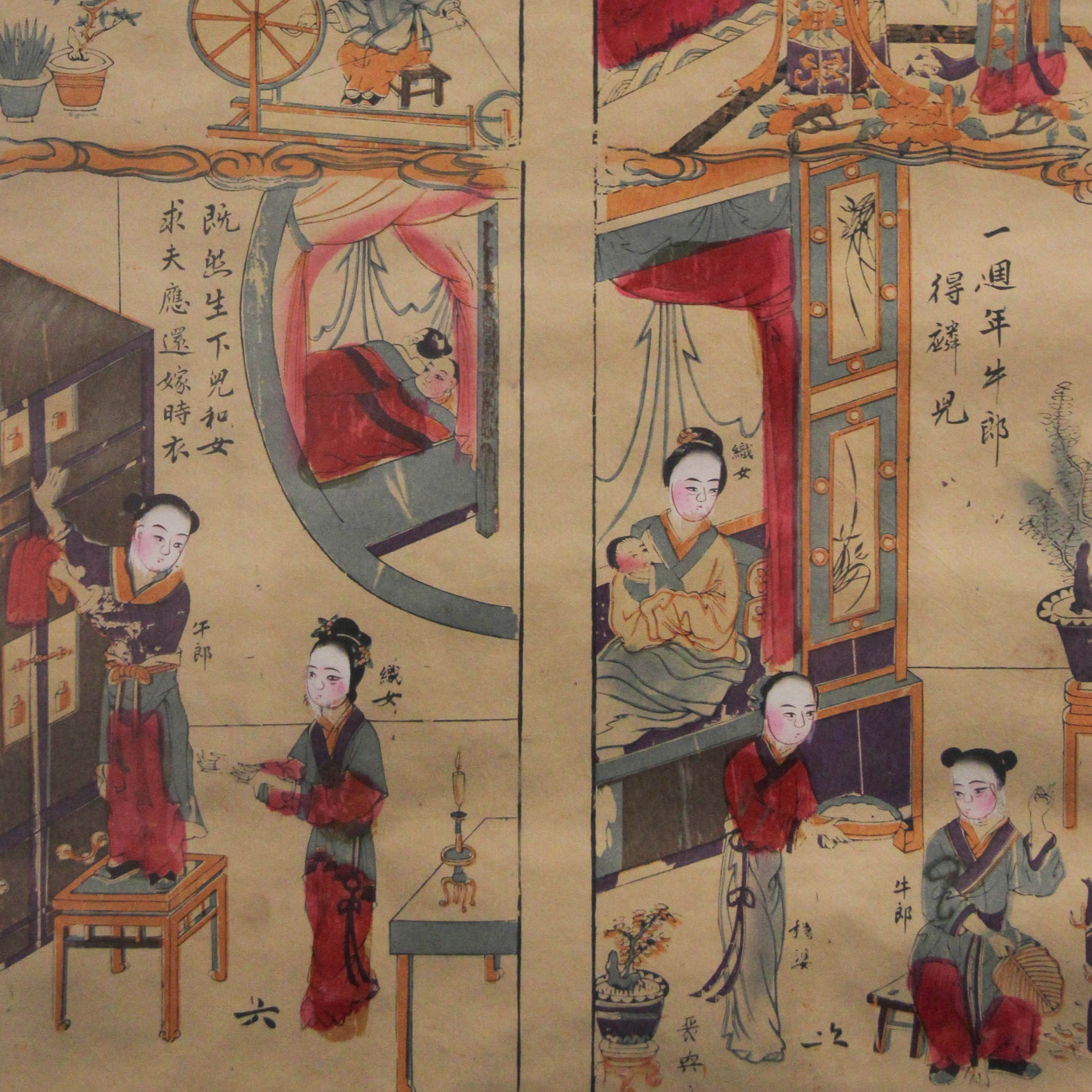
Nianhua, or Chinese New Year pictures, are chromatic woodblock prints that boast a long history dating back to the Western Han Dynasty (206 BC- AD 24). It developed into a formal art form during the Northern Song period (960-1127) thanks to the flourishing handicraft industry, thriving folk cultures and maturing woodblock printing technology.
- Stories of the Cowherd and the Weaver Girl, Qing Dynasty (1644-1911)
- Photo/IC
-
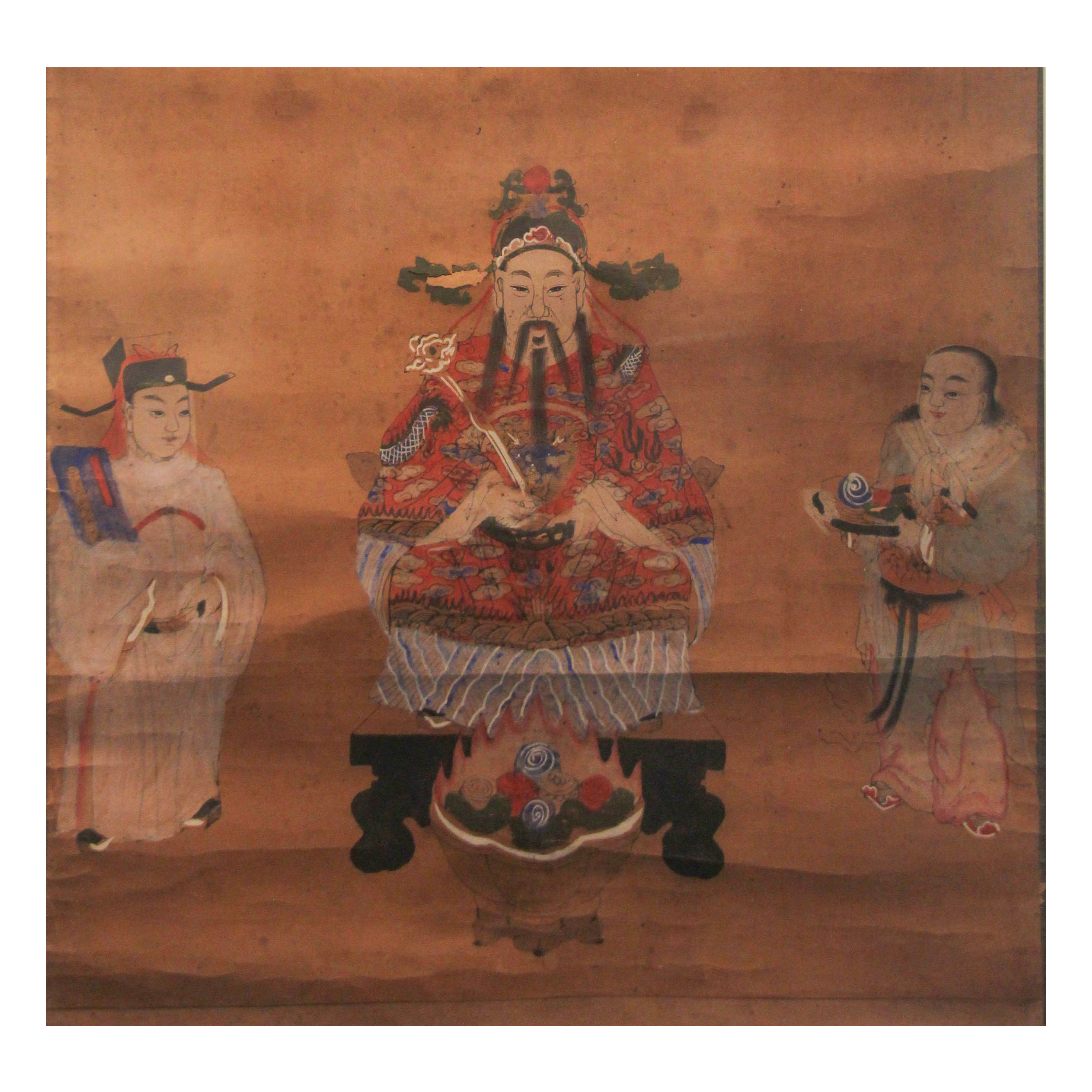
The Nianhua industry grew rapidly during the Ming Dynasty (1368-1644) with the evolving polychrome printing technique. Meanwhile, several prestigious bases were established and quickly rose to fame, such as Yangliuqing in Tianjin, Yangjiabu in Shandong province, and Taohuawu in Suzhou.
- Intellectual and martial gods of wealth, work of Yangjiabu, Qing Dynasty (1644-1911)
- Photo/IC
-
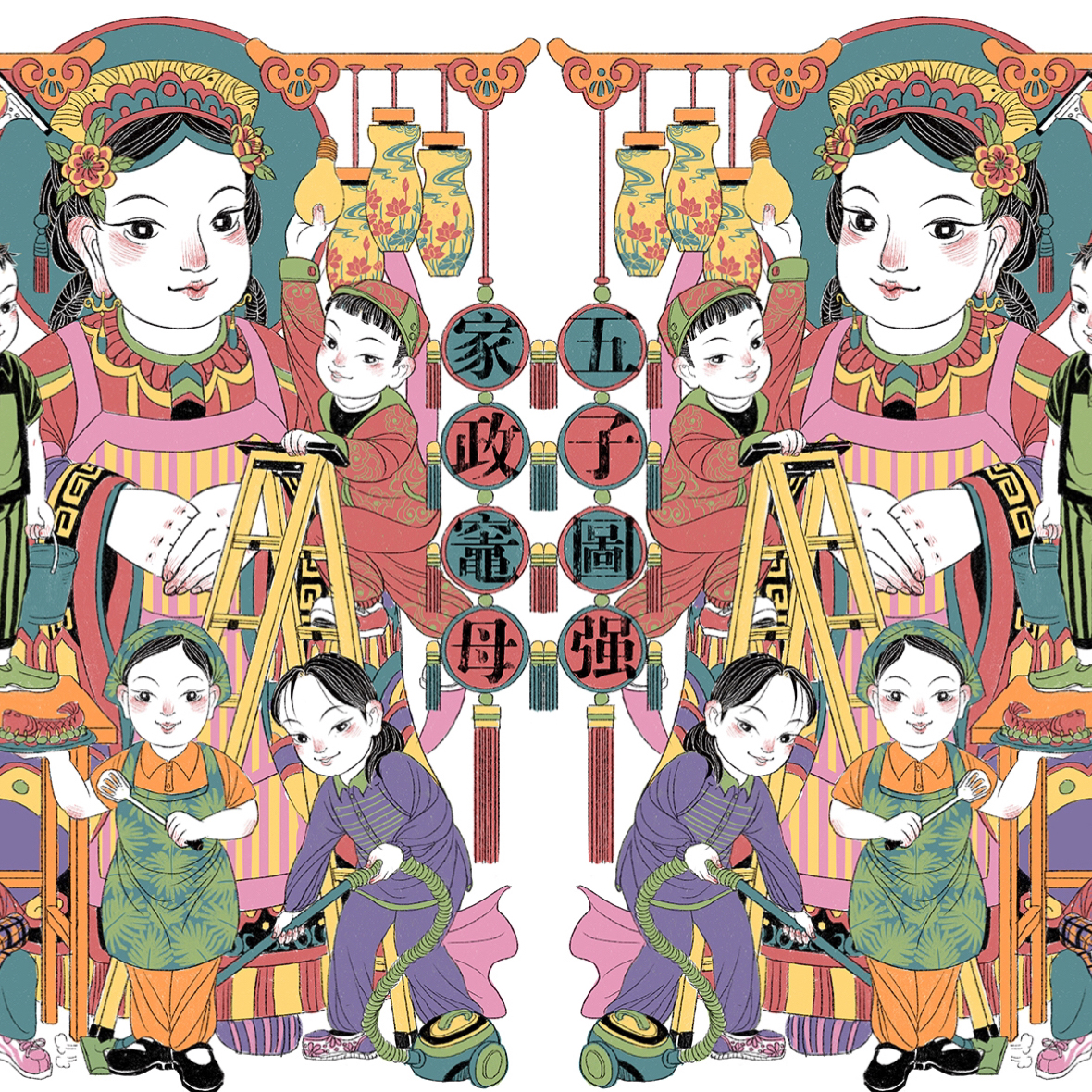
The Qing Dynasty (1644-1911) witnessed the heyday of the New Year paintings, with their rich subjects, multiple forms, refined techniques and popularity in the marketplace. Since the founding of the new China in 1949, this art form has been revitalized by integrating modern and traditional ideas.
- Neo-nianhua works
- Photo provided to chinadaily.com.cn
-
Subjects and types
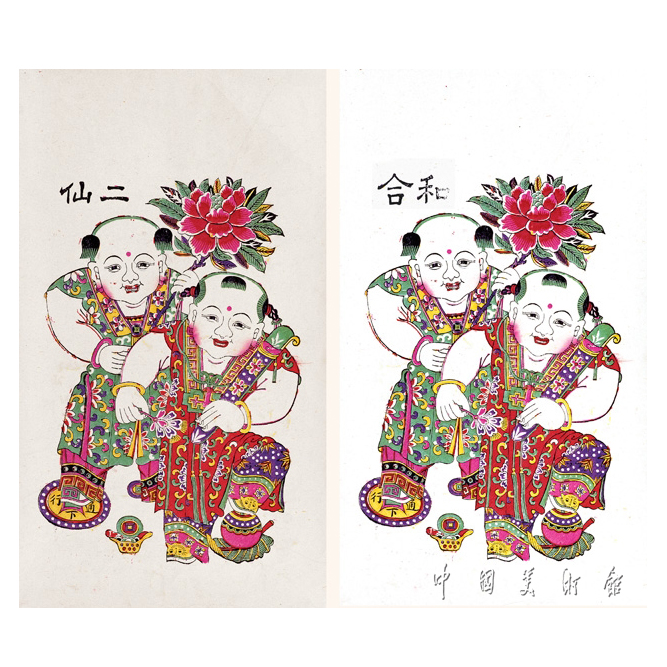
Renowned as the “encyclopedia of folk customs”, nianhua works cover a wide range of subjects that can be divided into four categories:
- Nianhua works depicting the Immortals of Harmony and Unity (Hehe erxian)
- Photo/namoc.org
-
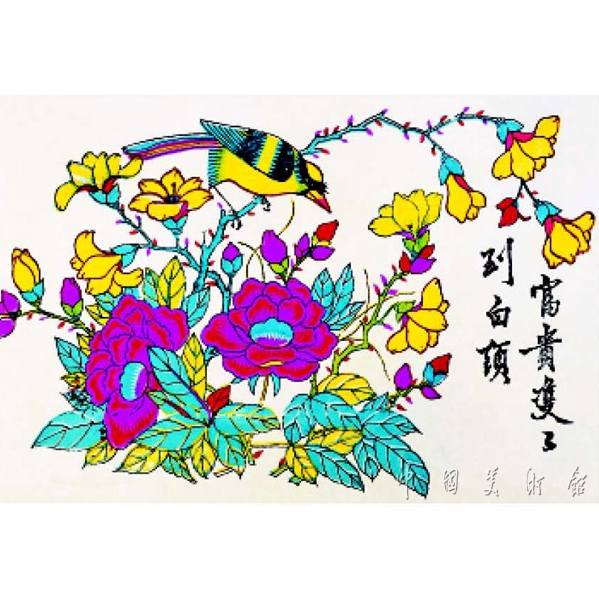
Immortals and auspicious items
Making up a large percentage of the total, this category covers fabled animals, flowers and objects associated with wealth and felicity, to convey the desire to ward off bad luck and welcome good fortune.
- A nianhua work using a pun to convey a wish for wealth and honor
- Photo/namoc.org
-
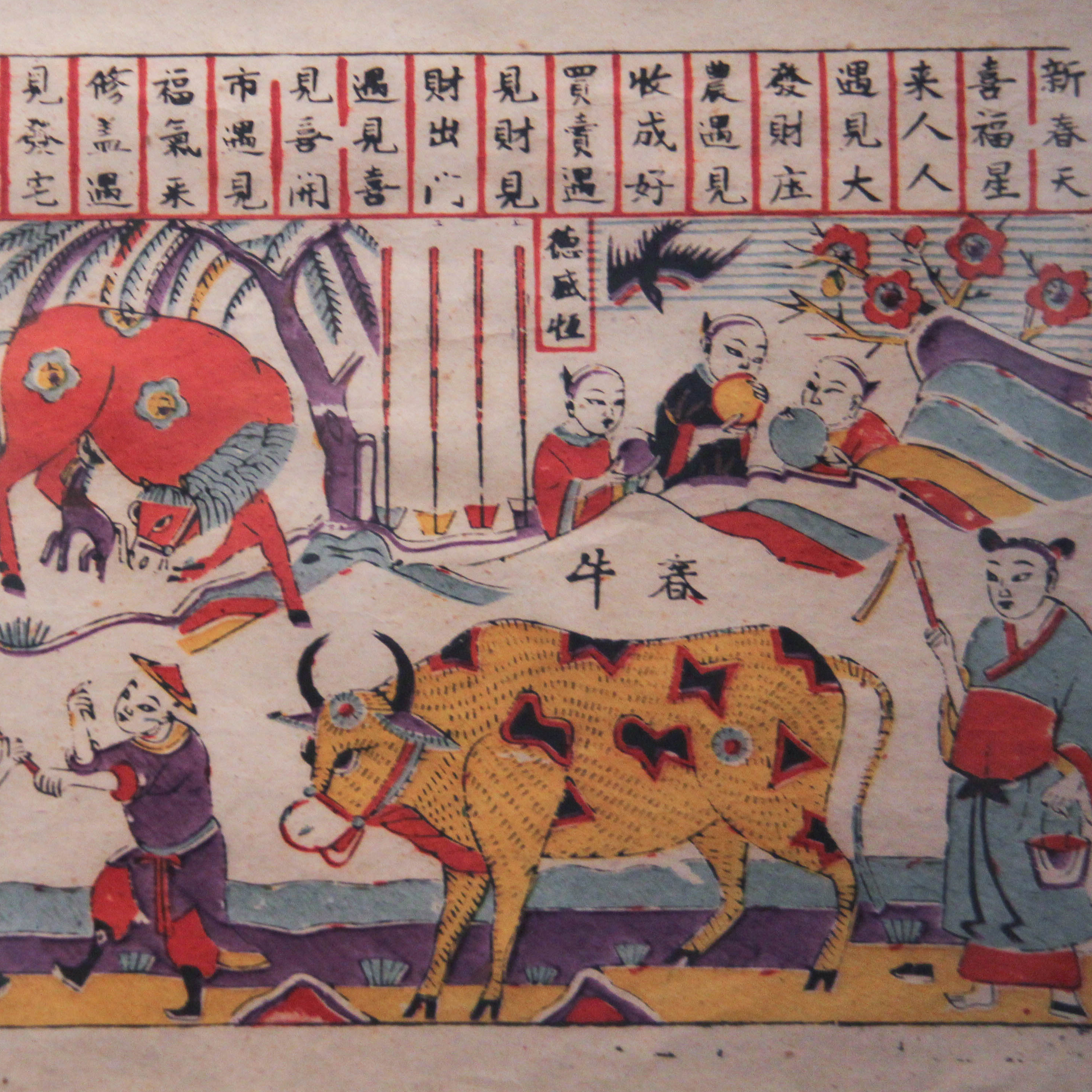
Secular life
Nianhua works with secular life as their subject matter record people’s daily routines, production activities, customs, news and anecdotes.
- Cattle Busy with Spring Plough
- Photo/IC
-
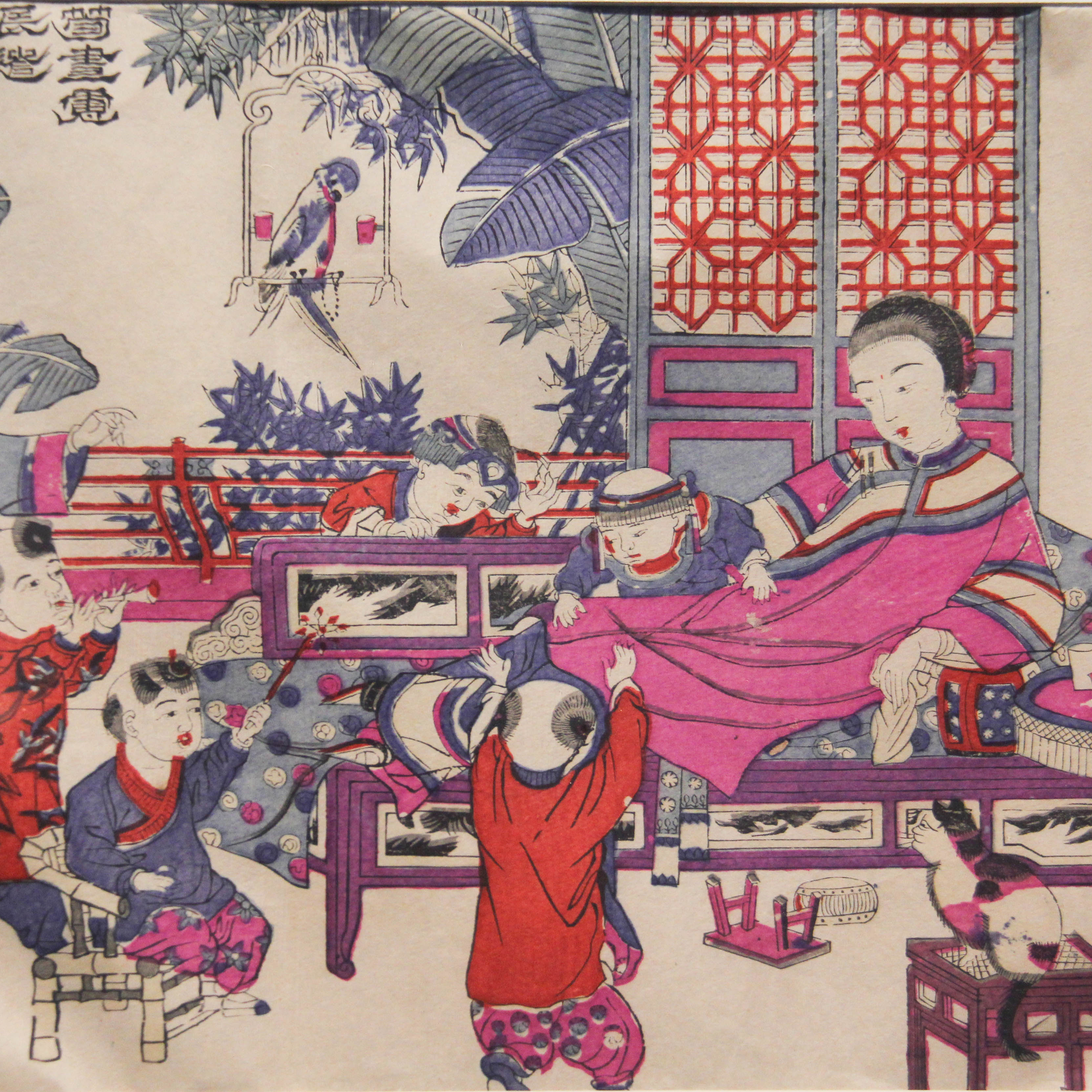
Beautiful people and children
Also a popular subject matter for nianhua paintings. Images of children and great beauties imply good wishes for fertility and a happy marriage.
- Mother and Children Frolic Together, work of Suzhou Taohuawu
- Photo/IC
-
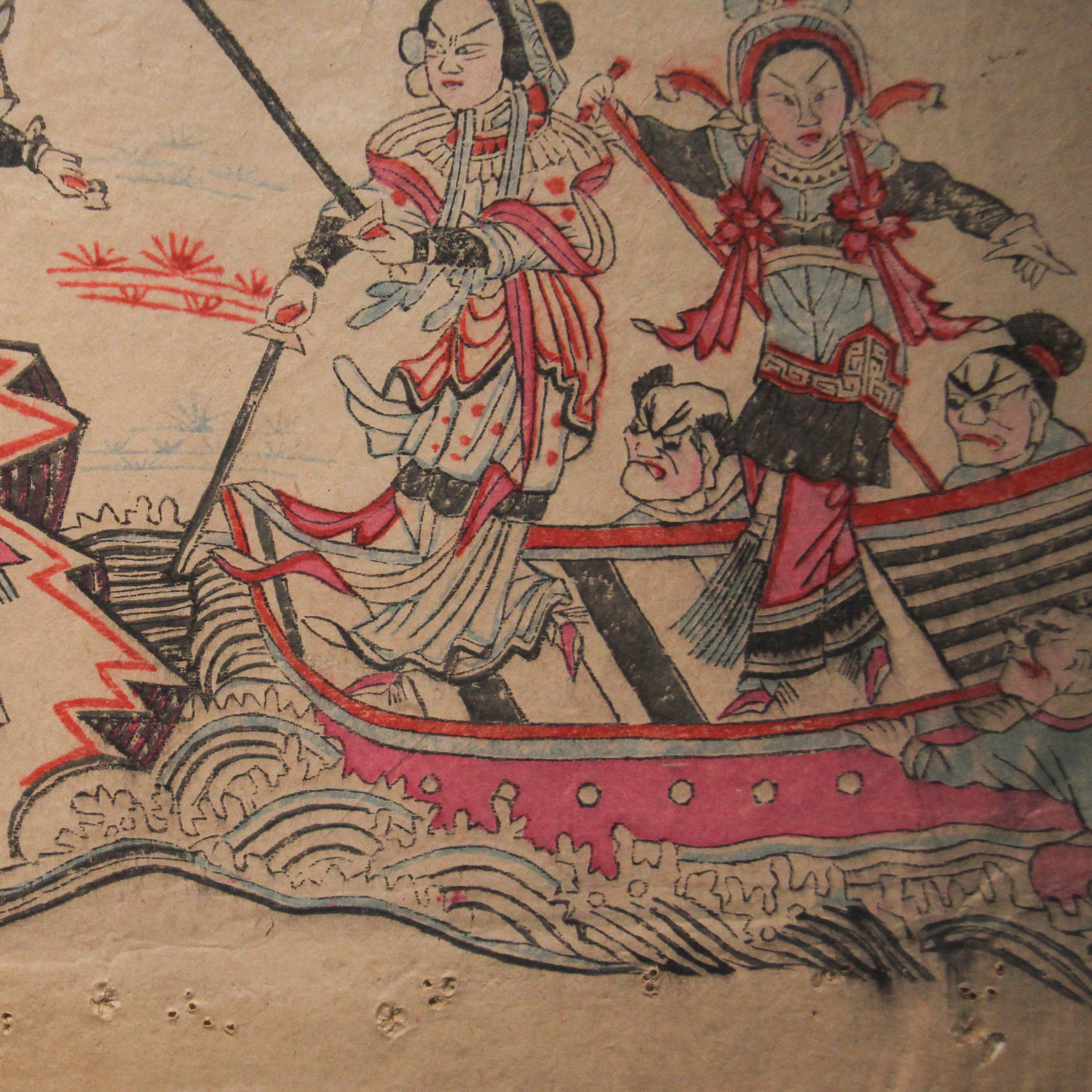
Stories and tales
A major part of this category draws inspiration from historical and folk stories, legends, novels and traditional Chinese operas.
- A nianhua work illustrates a scene from the folk tale Legend of the White Snake
- Photo/IC
-
Genres and functions
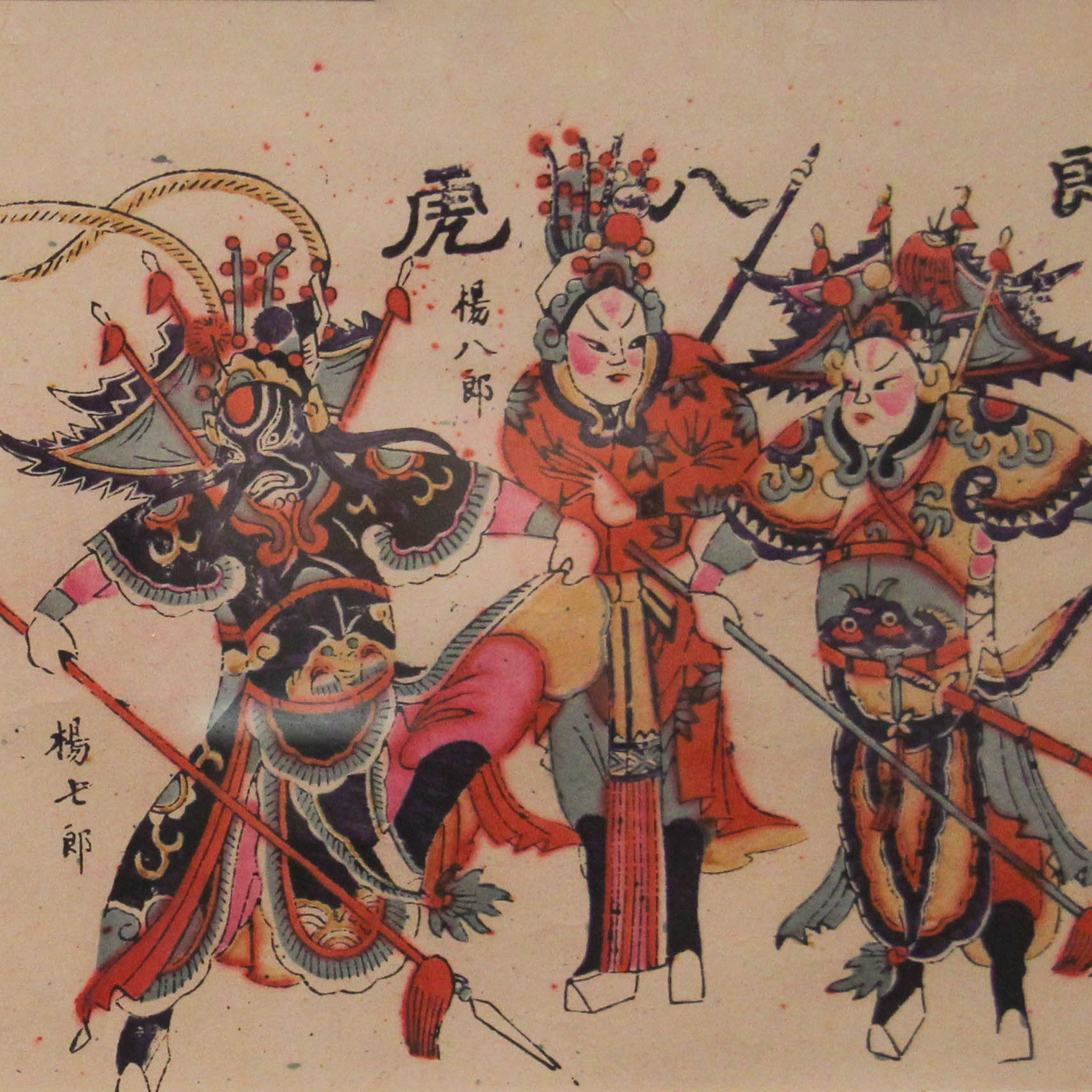
There are a variety of genres of nianhua designed for particular architectural layouts and functions, such as those put up to decorate doors, walls, kangs (a heatable brick bed in North China), windows or even in kitchens.
- War in Youzhou, an illustration of the Peking Opera repertoire. This horizontal-format picture is put up to decorate the walls around a kang.
- Photo/IC
-
Production proces
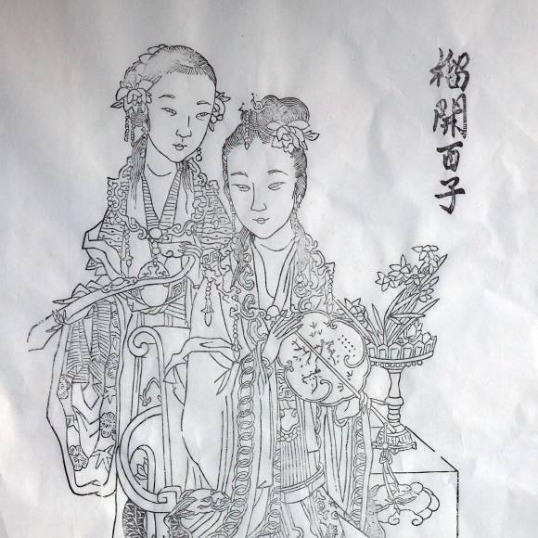
Generally speaking, four processes are involved in the completion of a piece of nianhua. First of all, the craftsman prepares an outline drawing of the pattern on a piece of thin paper.
- The outline drawing of a nianhua work
- Photo/Culture and Tourism Bureau of Tianjin Xiqing District
-
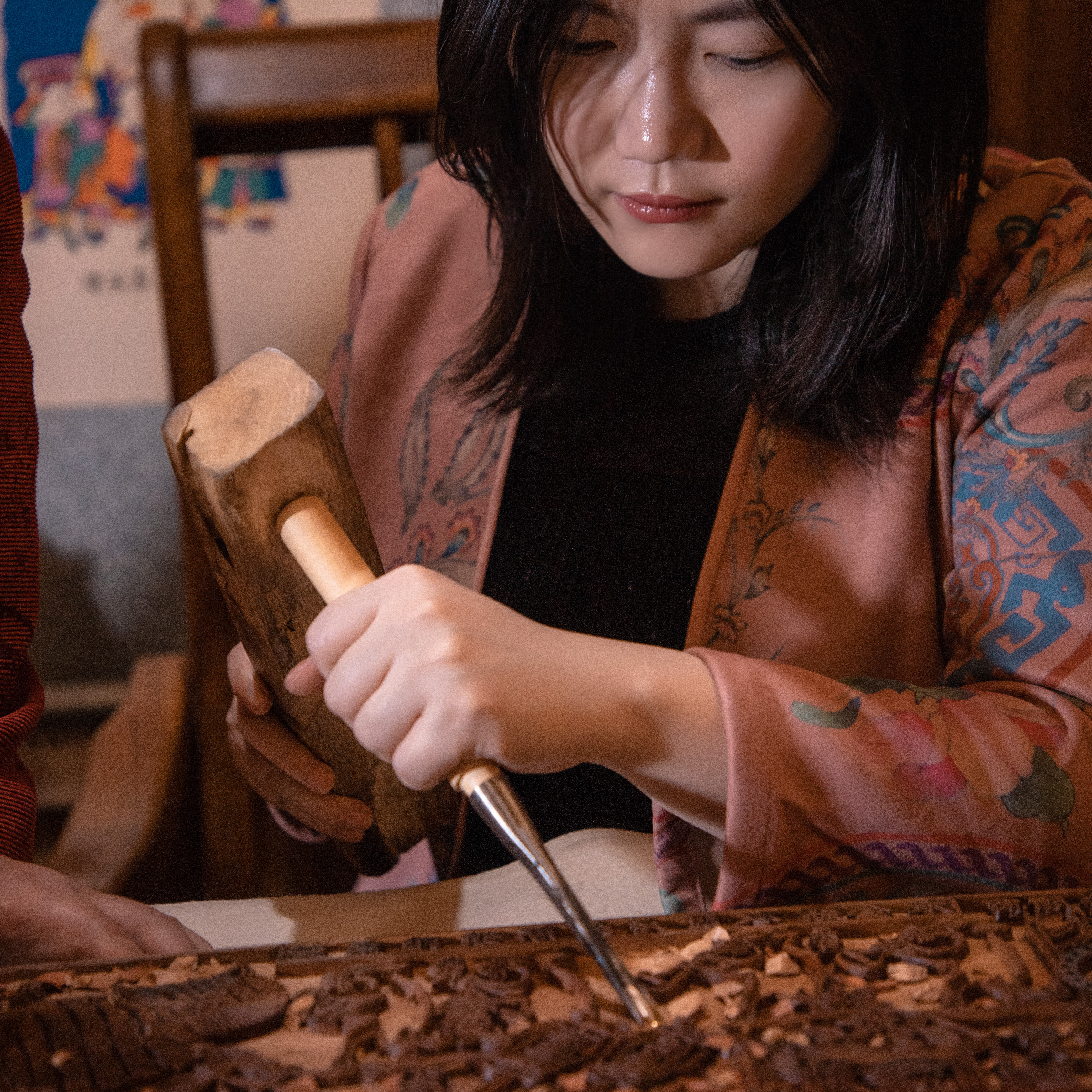
They then stick the paper onto a flat board to engrave a mirrored image of the outline drawing in relief, before printing several samples out.
- The engraving process of the modeling board
- Photo provided to chinadaily.com.cn
-
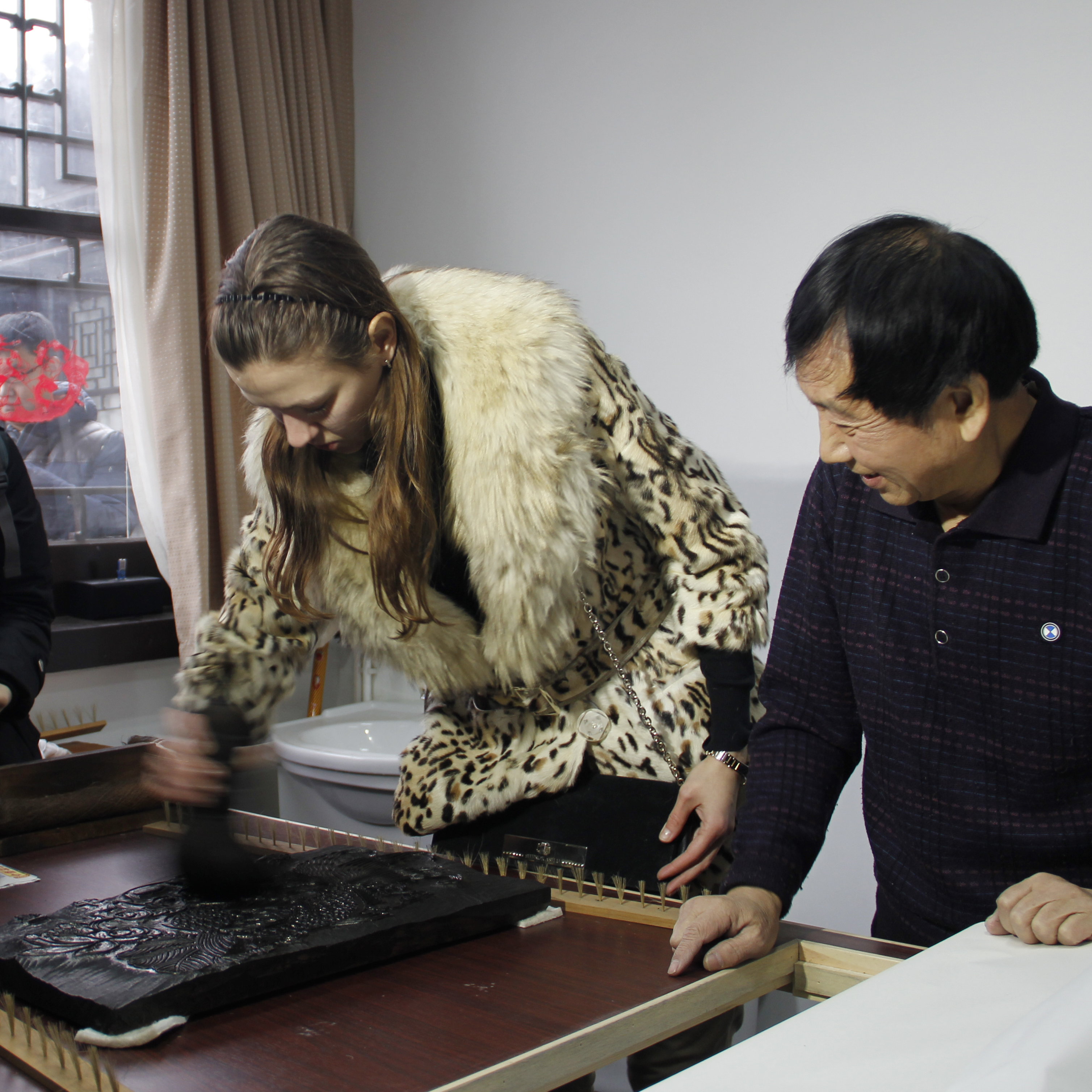
Then he/she designates the color scheme, and deconstructs the pattern into several parts (usually no more than five)- each of which will bear the same color - and carves the same number of wood plate reliefs accordingly.
- Brushing color onto a carved modeling board
- Photo/Culture and Tourism Bureau of Tianjin Xiqing District
-
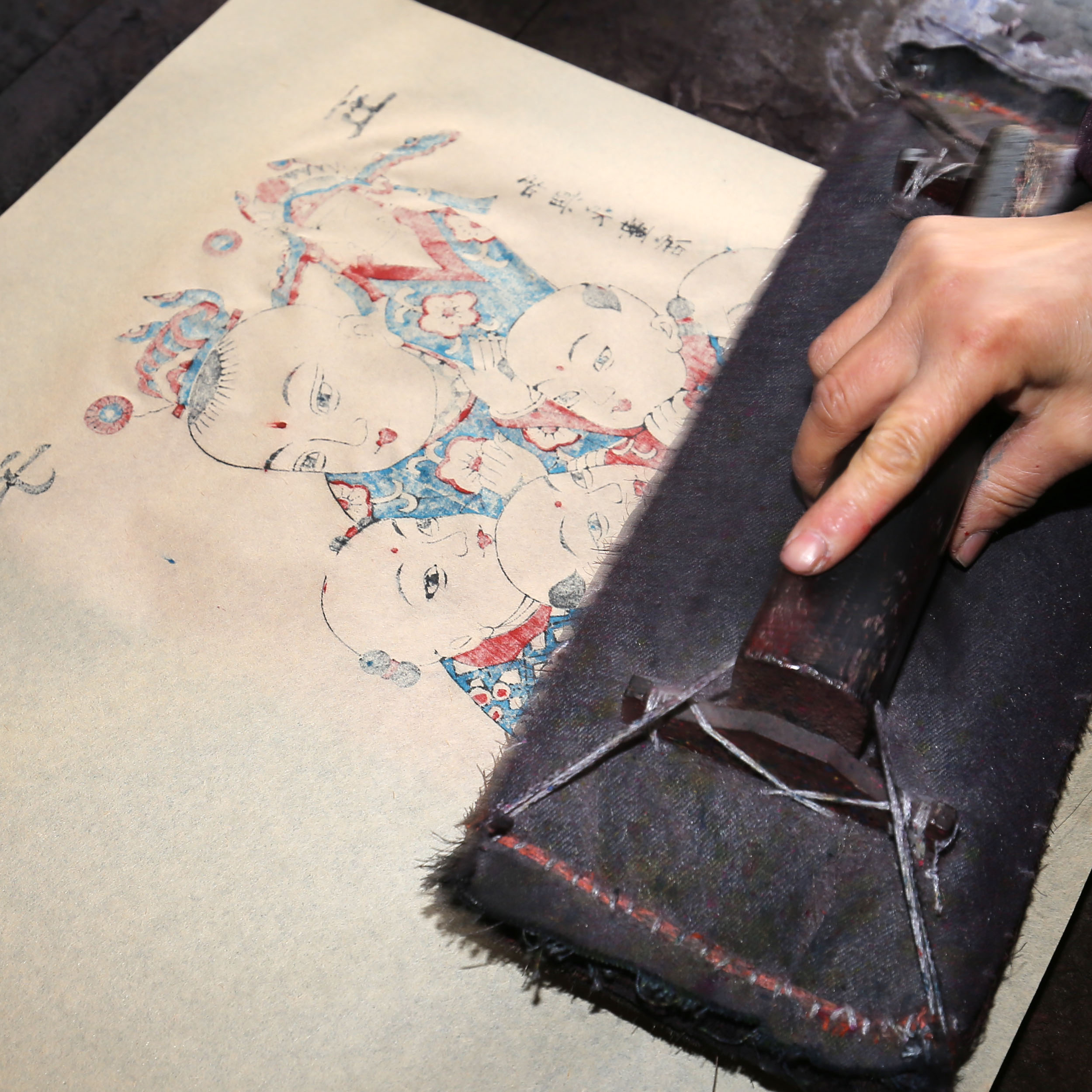
After brushing the carved wood boards with their designated colors, a set of color plates is finished. The craftsman puts white papers on a plate and rubs them firmly so the pattern is impressed. When all the plates have been brushed, the color New Year painting is finished.
- A craftsman brushes the pattern on the paper.
- Photo/IC
-
Major production bases
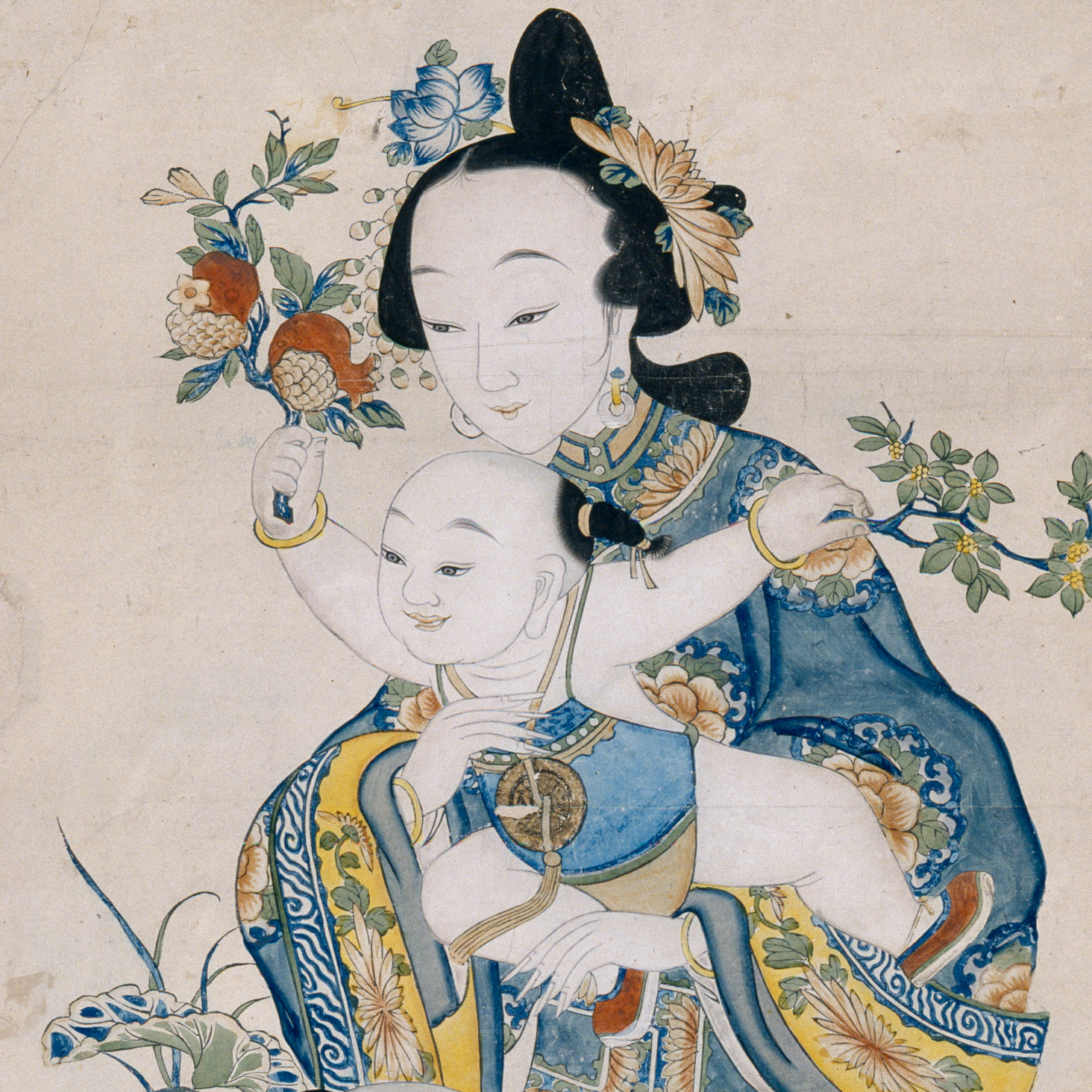
Of the key nianhua production bases, four enjoy the most renown, including Yangliuqing in Tianjin, Taohuawu in Suzhou, Yangjiabuin Shandong province, and Mianzhu in Sichuan province.
- Beautiful woman and children holding flowers
- Photo/Culture and Tourism Bureau of Tianjin Xiqing District
-
Yangliuqing, Tianjin
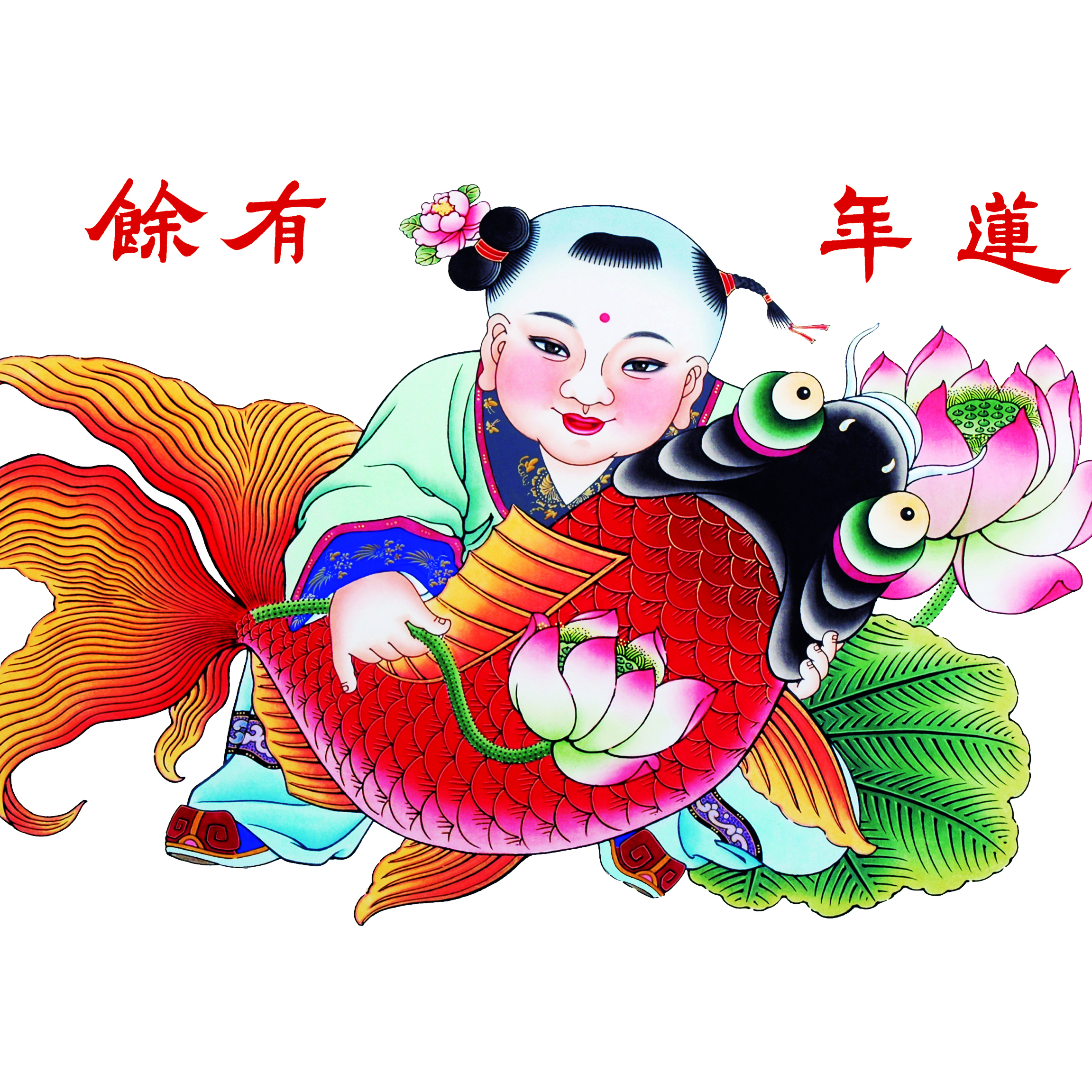
Yanliuqing, the leading nianhua brand in northern China, is well-known for its depiction of folk stories and traditional operas, the characters of which are presented artistically with bountiful colors, smooth outlines and a plain style.
- Annual Surplus, a work from Yangliuqing
- Photo/Culture and Tourism Bureau of Tianjin Xiqing District
-
Taohuawu, Jiangsu province
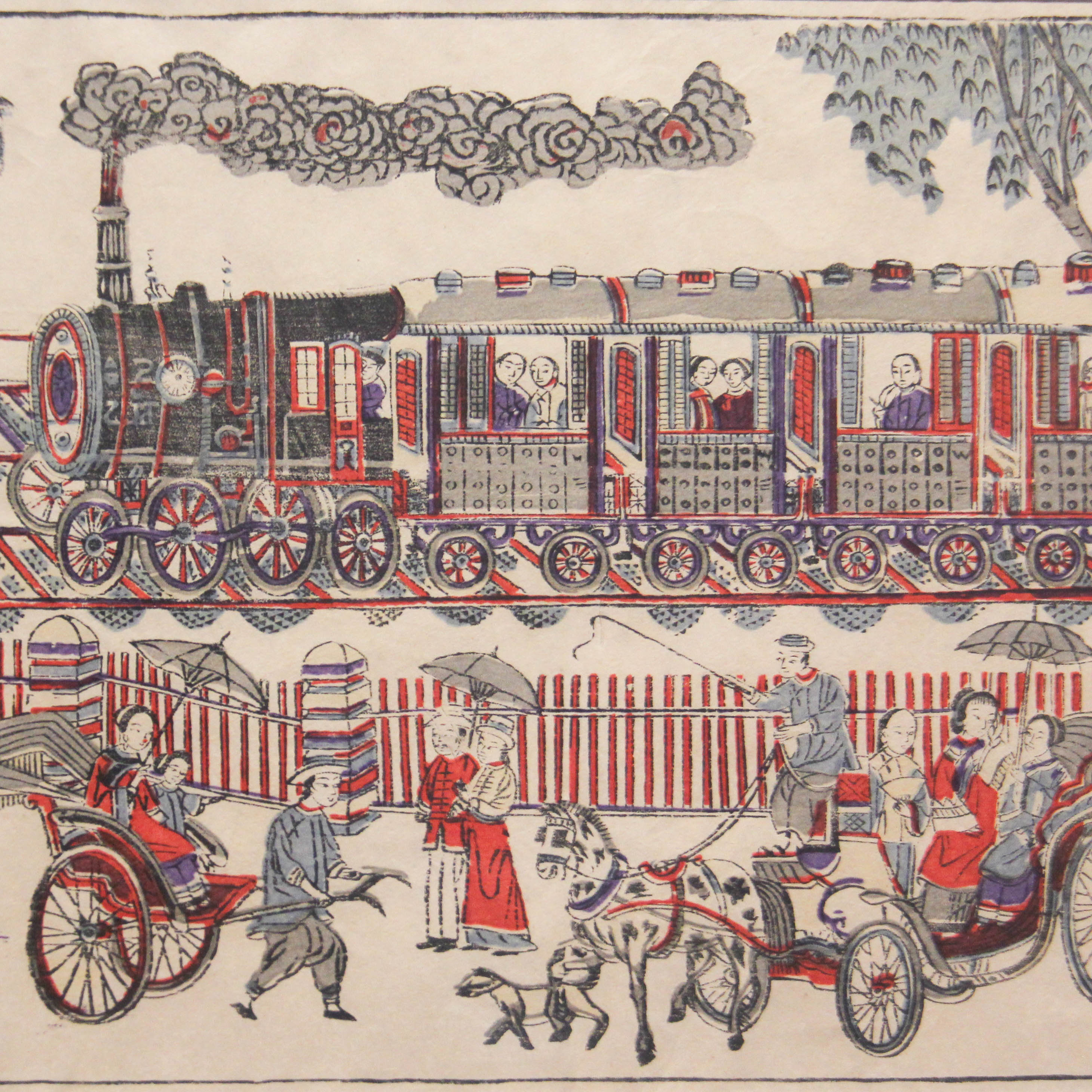
Absorbing advanced painting techniques from home and abroad, Taohuawu combines architecture with beautiful scenery and interesting stories and customs, presenting an exquisite visual effect.
- The New Railway in Shanghai, work of Suzhou Taohuawu
- Photo/IC
-
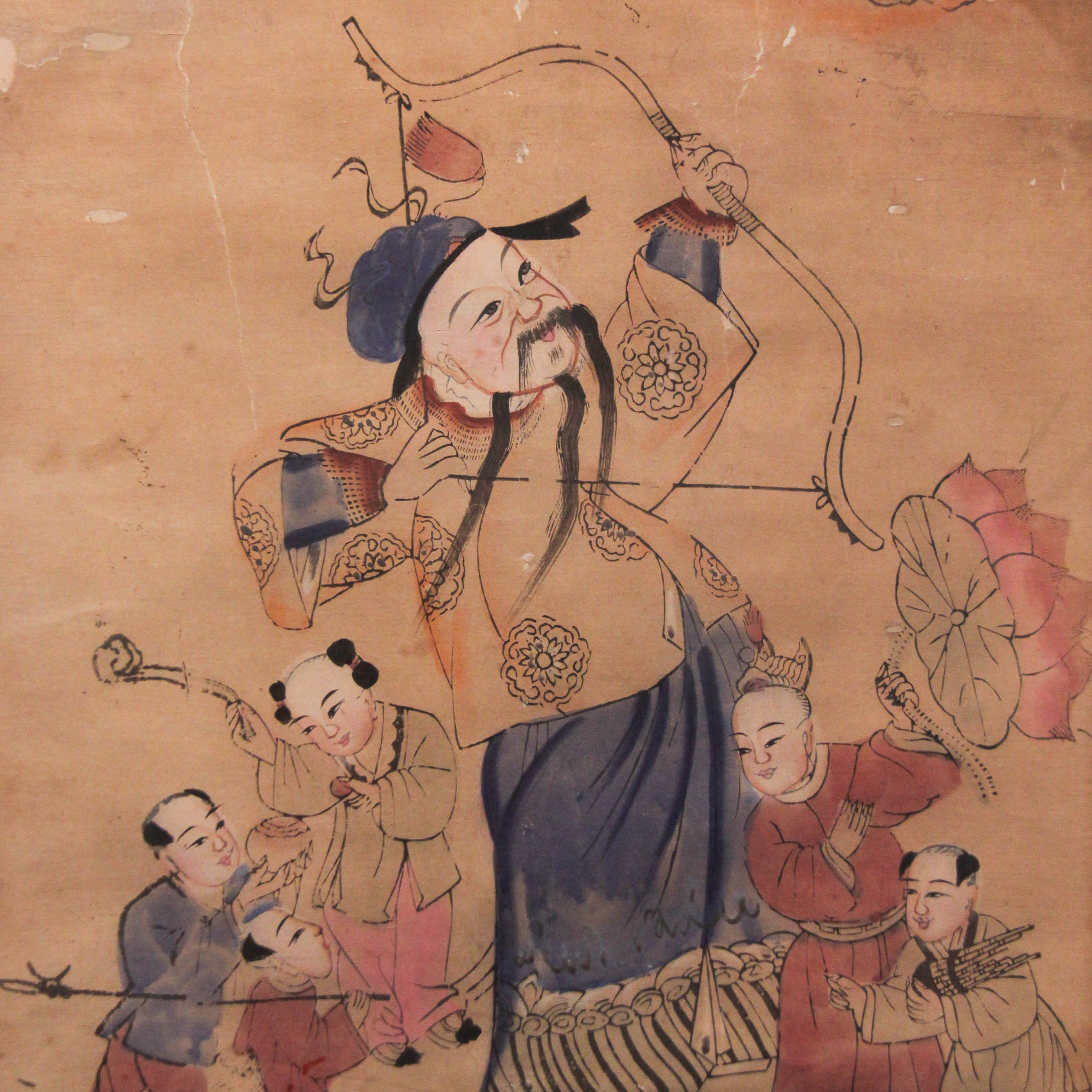
Yangjiabu, Shandong province
The Yangjiabu products are distinguished for their extensive outlines, simple modeling and strong colors. Those decorating the walls around kangs are the most representative of this style.
- Zhangxian (the god of fertility in traditional Chinese folk tales) Shoots Tiangou (a mythical animal doing harm to children), a Yangjiabu work
- Photo/IC
-
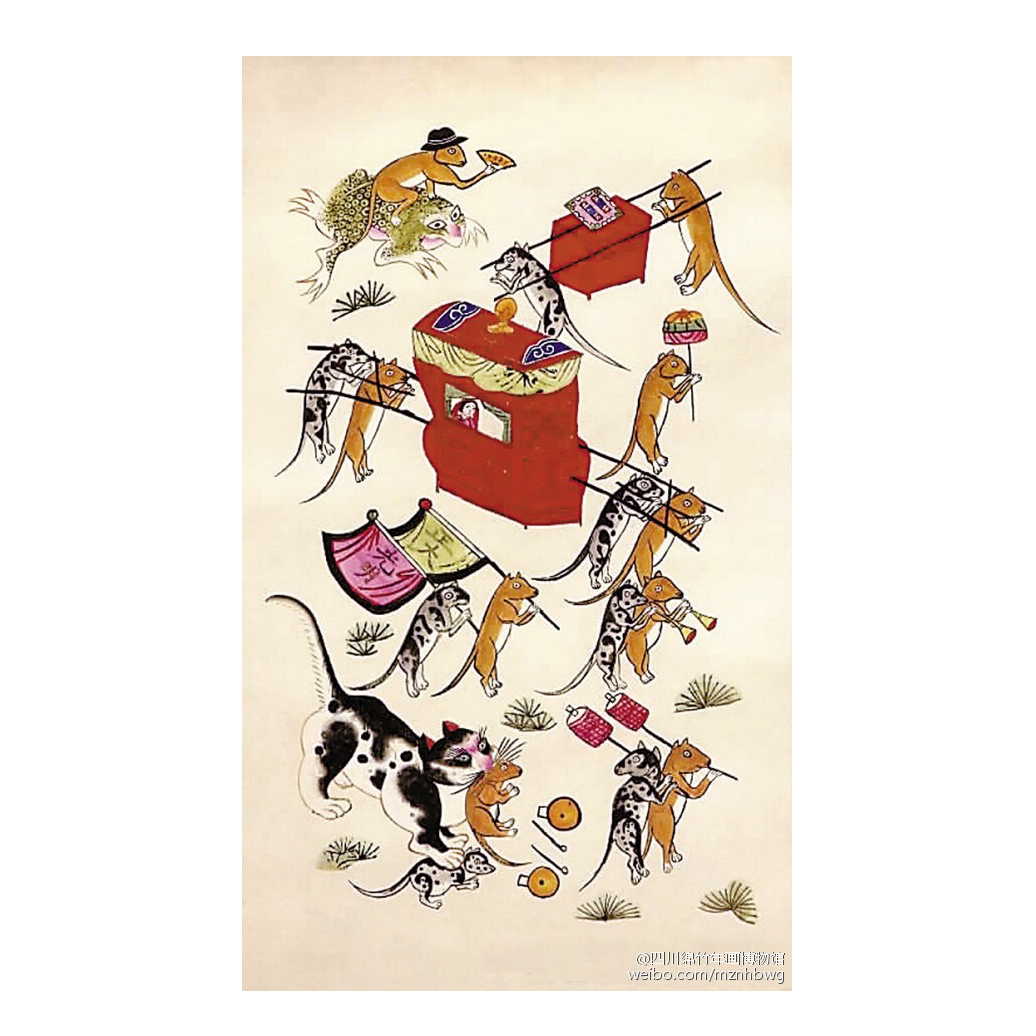
Mianzhu, Sichuan province
Renowned for their varied door gods and paintings of children, the Mianzhu school adopts the Gouran technique as its main method: that is, printing out just the outline of the pattern and then painting the colors with brush pens, which is quite different from the one employed by Taohuawu. The stamping method is also widely used in its works.
- Marriage of Mouse, a Sichuan Mianzhu work
- Photo/Official Weibo account of Mianzhu Nianhua Museum
-
Nianhua: A traditional Chinese folk encyclopedia

- Copyright©2026 China Daily. All rights reserved.


