

News and Policies
Yantai deepens economic ties with South Korea
Updated: Nov 9, 2026
chinadaily.com.cn
Print
Share - WeChat

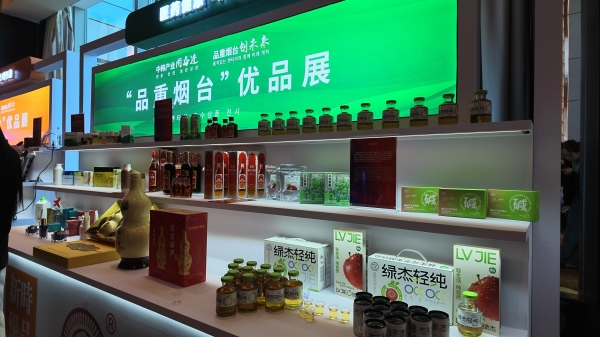
Products from Yantai are displayed at the "Remarkable Yantai" premium goods exhibition held during the event. [Photo/chinadaily.com.cn]
The ninth Shandong-South Korea Economic Cooperation Exchange Conference has once again put Yantai at the center of economic cooperation between China and South Korea, with a new batch of signed deals reinforcing the city's role as a key gateway for South Korean investment in northern China.
Yet these agreements are less the beginning of something new than a reflection of a deeper relationship. Yantai's edge with South Korea is structural, not ceremonial. Geography explains the origin of the relationship — it is one of China's closest cities to South Korea — but not its persistence.
What has allowed the relationship to endure is industrial embedding. South Korean firms have not merely invested in Yantai but relocated production lines into its supply chains, as LG Electronics did in 2023 when it moved a Pyeongtaek line to the Huang-Bohai New Area.
That decision is underpinned by a broader foundation: more than 4,000 South Korean-invested projects and nearly $7 billion in utilized Korean capital have accumulated in the city. Once component clusters and logistics response times become the reason for staying, investment stops being footloose.
This explains a shift in the composition of cooperation. Earlier ties between South Korea and Yantai centered on consumer goods trade; the new projects focus on AI industrial motors, bonded cross-border transshipment and medical aesthetics — higher-value activities that foster deeper economic integration. Of the 23 deals signed at this year's conference, worth about $210 million, 11 involved projects in Yantai, the most of any city in the province.
The Yantai-South Korea Week, held alongside the conference, also features cultural and youth events that help build familiarity and trust, laying the groundwork for long-term cooperation.
The implication is that economic ties between Yantai and South Korea are graduating from individual transactions toward deeper integration. Whether this continues depends less on signing ceremonies than on whether local supply chains keep upgrading fast enough to remain indispensable.
MOST POPULAR
- 1 CIIE primed for a record ninth edition
- 2 Policies concerning expats, foreign enterprises in October 2026
- 3 CIIE to be fully powered by green energy for 4th straight year
- 4 China moves to facilitate current account forex transactions
- 5 China unveils 16 measures to further liberalize Hainan Free Trade Port trade


