

News and Policies
Exhibition traces Taishan Mountain's journey from ancient worship to world heritage site
Updated: Sep 16, 2026
chinadaily.com.cn
Print
Share - WeChat

An exhibition titled Taishan: The Eastern Mountain, Where All Life Arises opened at Shandong Museum on Sept 14. Featuring 204 precious artifacts from 27 museums, the exhibition showcases how Taishan Mountain evolved from an ancient center of eastern worship into a sacred site for imperial ceremonies and public pilgrimage, ultimately becoming a UNESCO World Cultural and Natural Heritage site.
The artifacts on display include bronze vessels from the Warring States period (475-221 BC), a bronze tripod from a imperial palace at the foot of Taishan Mountain during the Han Dynasty (206 BC-AD 220), a Ming Dynasty (1368-1644) bronze statue of Bixia Yuanjun, and Qing Dynasty (1644-1911) painted enamel bronze treasures.
Through three cultural layers — the origin of beliefs, imperial sacrificial rituals, and the world of faith — the exhibition decodes Taishan Mountain's unique mountain ceremonial system, cosmological concepts, and spiritual significance in world civilization.
Running from Sept 15 to Dec 13, the exhibition invites visitors to explore how Taishan Mountain nourishes Chinese civilization and connects the world. Through each artifact and story, audiences can appreciate the mountain's enduring role in Chinese culture and global heritage.
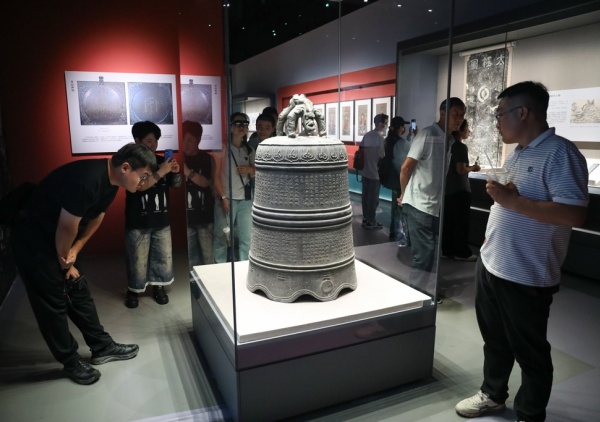
Visitors explore Taishan: The Eastern Mountain, Where All Life Arises exhibition at Shandong Museum. [Photo/IC]
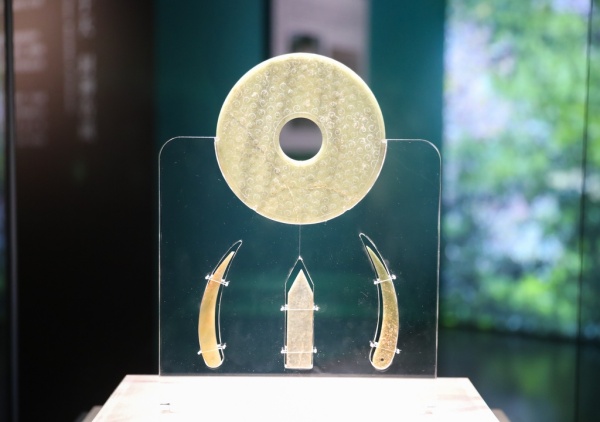
The exhibition decodes Taishan Mountain's unique mountain ceremonial system, cosmological concepts, and spiritual significance in world civilization. [Photo/IC]
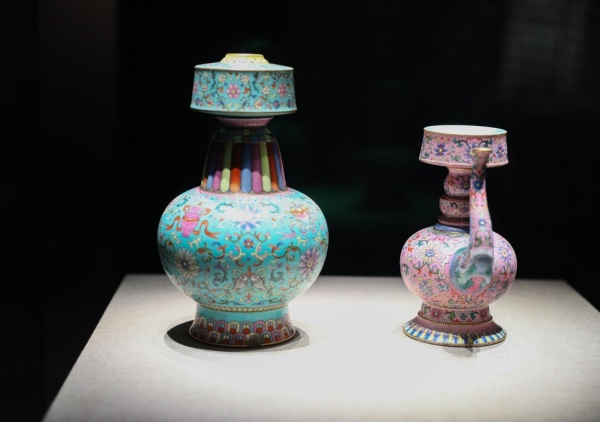
From ancient worship to imperial ceremonies and world heritage — the story of Taishan Mountain unfolds through 204 treasures at Shandong Museum. [Photo/IC]