
Attractions
Sacred peaks to Danxia cliffs: Fujian's World Heritage
Updated: Jun 12, 2026
www.chinaservicesinfo.com
Print
Share - WeChat

Besides Fujian's well-known Fujian Tulou, Gulangyu Island, and Quanzhou, Mount Wuyi and Taining Danxia complete the province's diverse mix of five World Heritage sites.
Mount Wuyi
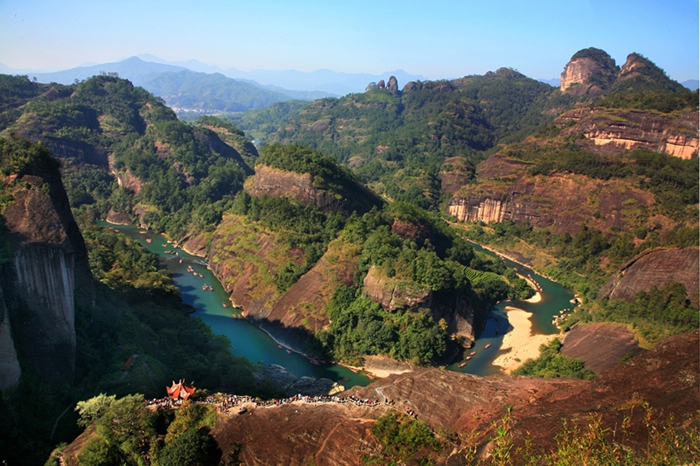
Inscribed on the World Heritage List in December 1999, Mount Wuyi is recognized for its outstanding biodiversity and is one of southeastern China's key conservation areas and a refuge for many ancient, relict species, several of which are endemic to China. The dramatic landscape of the Nine-Bend River, with its steep gorges, clear waters, and historic temples provides an important cultural setting linked to the emergence of Neo-Confucianism, which has influenced East Asian thought since the 11th century.
The site also includes significant archaeological remains, such as an ancient administrative capital built near the Han Dynasty (206 BC-AD 220) settlement of Chengcun, an archaeological site.
Taining Danxia: A key part of China Danxia
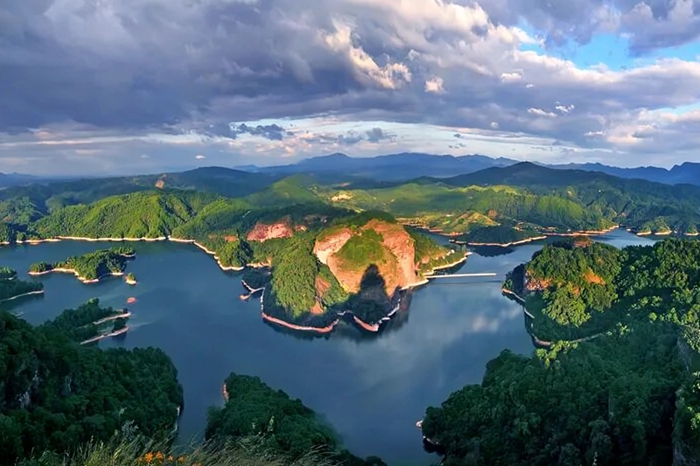
Inscribed on the World Heritage List in 2010 as part of China Danxia, Taining Danxia forms an integral component of continental red terrigenous sedimentary beds shaped by endogenous forces (including uplift) and exogenous forces (including weathering and erosion).
Located in the subtropical zone of southeastern China, it preserves a well-developed planation surface and an outstanding concentration of erosional landforms. The landscape represents an actively evolving stage of Danxia development, characterized by steep red cliffs, canyon systems, and fluvial processes.