
News and Policies
Maguai Festival held in Donglan with vibrant cultural festivities
Updated: Mar 25, 2026
guangxi.chinadaily.com.cn/hechi
Print
Share - WeChat

Donglan county of Hechi in South China's Guangxi Zhuang autonomous region hosted the Maguai Festival on March 20 in Baying village, the birthplace of this unique festival, providing visitors with an immersive experience of the farm culture of the Zhuang ethnic group.
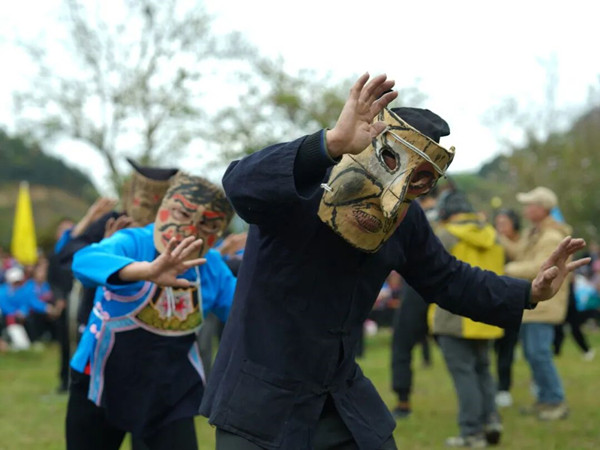
Locals sing and dance during the festival. [Photo/Hechi Daily]
"Maguai" is the local word for frog, which is regarded as the incarnations of gods, representing prosperity and wealth to the Zhuang people. The Maguai Festival, celebrated around the second day of the second lunar month, involves special activities to pray for favorable weather, bountiful harvests, and prosperity. The festival was added to the national intangible cultural heritage protection list in 2006.
The festival began with the resonant sound of bronze drums echoing through the mountains, as drummers performed the welcoming ceremony. At the Bronze Drum Square, a spectacular display of synchronized drumming captivated attendees, creating an atmosphere of celebration.
Central to the festival were the traditional Maguai rituals, preserved in their ancient form. Villagers celebrated the festival with the Maguai dance, in which participants donned traditional Zhuang attire and enacted farming scenes, symbolizing their deep connection to the land.
Cultural performances flourished throughout the festival. Diverse forms of ethnic heritage were showcased, and interactive experiences like making sticky rice cakes and spinning tops kept visitors entertained, adding to the festive spirit.
Baying's food street offered local delicacies, while the bustling market highlighted local products and crafts, and live-streaming promotions boosted rural commerce.
As night fell, a bonfire united locals and visitors in dance and song, embodying the spirit of unity and cultural celebration.